
Cell Phones Helping Manage Diabetes

According to a new study from the University Of Maryland School Of Medicine, software programs are very effective in helping patients with type 2 diabetes.

Cell Phones Helping Manage DiabetesCell Phones Helping Manage Diabetes: According to a new study from the University Of Maryland School Of Medicine, an interactive computer software program could be very effective in helping patients with type 2 diabetes, manage their diabetes using their mobile phone.

Patients who used the mobile health software were studied, it was seen that those using the mobile health software gained a reduction in the amount of hemoglobin A1C in their blood. The amount lowered was 1.9 percent over a period of one year. Through these findings, researchers are looking at other health management alternatives as well.

Charlene C. Quinn, Ph.D., R.N., an assistant professor of epidemiology and public health at the University Of Maryland School Of Medicine and the principal investigator states, “These results are very encouraging. The 1.9 percent decrease in A1C that we saw in this research is significant. Previous randomized clinical trials have suggested that just a 1 percent decrease in A1C will prevent complications of diabetes, including heart disease, stroke, blindness and kidney failure.”

Since the world is mostly dependent on internet use in today’s more technical savvy world, the study shows that more people are managing their diabetes better through the internet located on their mobile phones or other mobile communications devices. Not only can patients manage their diabetes, they can send their results directly to their doctor as well.

Dr. Quinn gives more details about the mobile software program, “Mobile health has the potential to help patients better self-manage any chronic disease, not just diabetes. This is one of the first large, reported, randomized clinical studies examining the mobile health industry, which is rapidly growing. The U.S. Food & Drug Administration just last month released draft guidance on how it intends to regulate the field. Our results can help define the science behind this new strategy for disease management.”

While this software is perfect for type 2 diabetic patients, it is not recommended for type 1 diabetic patients. People who have been diagnosed with type 2 diabetes either cannot produce enough insulin to process sugar into energy or their cells do not recognize the insulin at all. The important measure to manage diabetes is to control the amount of hemoglobin A1C is a person’s blood.  A1C is a molecule that is found in a person’s red blood cells that binds itself with sugar. If a person’s blood sugar level is high, their A1C level will be high as well. The recommended amount for a person’s A1C level is 7 percent. People with diabetes stand at about 9 percent or more which can increase any diabetic complications.

Dr. Quinn says, “We tell patients that they can meet these goals if they eat a healthy diet, exercise daily and take their medication as directed, but we don’t really give them the tools to do that.”

However, the new mobile software program is just the tool that type 2 diabetics need to manage their diabetes.

No Higher Risk for Type 2 Diabetes In Natural Menopause versus Ovarian Removal Menopause

This is the finding of a recent menopausal study that specifically targeted women who had natural menopause and also included women who had had their ovaries removed.

No Higher Risk for Type 2 Diabetes In Natural Menopause versus Ovarian Removal MenopauseNo Higher Risk for Type 2 Diabetes In Natural Menopause versus Ovarian Removal Menopause: Whether menopause comes naturally as a female ages or is brought on at an earlier age due to a hysterectomy that involves ovary removal, there is no increase in the diagnosis of type 2 diabetes, and the risk for type 2 diabetes does not increase.
This is the finding of a recent menopausal study that specifically targeted women who had natural menopause and also included women who had had their ovaries removed.  In all other studies, the natural menopausal women and the ovarian-removed menopausal women were combined together in a group rather than being separated.   This study is unique in that it separated the natural versus ovarian removal menopause for analysis and study.

This conclusion came as a result of a study carried out by the University of Michigan Health System.  The lead author of the study, Catherine Kim., M.D., M.P.H., an Associate Professor of Internal Medicine and Obstetrics and Gynecology, stated, “In our study, menopause had no additional effect or risk for diabetes.”  Dr. Kim added, “Menopause is one of many small steps in aging and it doesn’t mean women’s health will be worse after going through this transition.”

It was previously thought that postmenopausal women were at higher risks for type 2 diabetes because of a relatively high level of testosterone, the male hormone, which is considered a risk factor for type 2 diabetes.  This study concluded that was not the case.

This study also gave new information on the effect of diet and exercise and hormone replacement therapy on the overall health of menopausal women.

The participants of the study were enrolled in the Diabetes Prevention Program, which was a clinical trial of adults with glucose intolerance.  Glucose intolerance is the body’s struggle to convert glucose, or blood sugar, into energy.  Glucose intolerance at times leads to type 2 diabetes.  There are many factors that contribute to the diagnosis of type 2 diabetes, and these include age, weight, physical activity and family history.

When someone is diagnosed with glucose intolerance, the Diabetes Prevention Program study showed that lifestyle intervention and the addition of Metformin, a drug commonly used in the treatment of type 2 diabetes, as a preventive measure can delay or stop the progression to a diagnosis of type 2 diabetes in women who have gone through menopause.  Lifestyle changes would consist of losing 7 percent of a person’s body weight and exercising at least 150 minutes per week.  The study found that more research is needed on the role that hormone replacement therapy plays in the risk for type 2 diabetes.

The results of this study will appear in the magazine Menopause.  Funding for the research was provided by the National Institute of Diabetes and Digestive and Kidney Diseases, and the National Institute on Aging, the Centers for Disease Control and Prevention, and the American Diabetes Association.

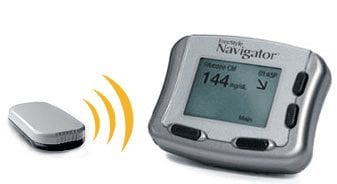
Freestyle Navigator CGM

The Freestyle Navigator CGM is a continuous glucose monitor that allows for continuous testing on diabetic patients who have advanced Type 1 diabetes and need to send their doctor their test results quite regularly.

Freestyle Navigator CGM is a continuous glucose monitoring system used by diabetics who monitor their blood sugars. This is our review on this CGM.

Diabetes is sweeping across the globe, but just in America alone there are more than 25 million women, men and children who have diabetes. Diabetes is the type of disease that never goes away and while we can all help being a Type 2 diabetic through diet and exercise, it is always there. Those who have Type 1 diabetes must test quite a bit throughout the day and are forced to use insulin to keep themselves regular.

For those who can’t test regularly or have an outdated monitor that just isn’t proving to show regular test results, many times diabetic complications become the issue. However, it doesn’t have to be an issue. In fact, diabetes medicine and technology is advancing all the time and new monitors are popping up to help diabetics to not only test regular but to have their test results sent directly over to their doctor. If you think it’s time for a new monitor, you should really think about the new Freestyle Navigator CGM, but only if you need continuous glucose readings.

The Freestyle Navigator CGM is a continuous glucose monitor that allows for continuous testing on diabetic patients who have advanced Type 1 diabetes and need to send their doctor their test results quite regularly.

Freestyle Navigator CGM Features

  • Customizable early-warning alarms in advance of 10-30 minutes
  • Continuous glucose readings each minute that provides real-time readings, graphs and trends
  • TRU Directional Arrow Indicator technology to accurately project glucose direction and rate of change
  • Suitable for everyday activities which include exercise, swimming and even bathing
  • Contains built-in Freestyle meter for convenient calibration (had minimum of 4 calibrations averaged over the total 5-day period) and confirmatory blood glucose tests
  • Sensor continuously worn on body for up to 5 days
  • Wireless transmitter sends glucose readings to the receiver anywhere within a 10-foot range
  • Graphs and reports show glucose patterns

The Freestyle Navigator CGM comes in three different parts and each part is extremely helpful to the other part. Here are the three parts:

Sensor

The sensor is placed on the body such as on the back of your upper arm or on your abdomen and uses a special adhesive to help keep it securely attached to your skin. Because this is a special adhesive you don’t have to worry about skin irritation.

Transmitter

The transmitter is attached to the sensor and it sends glucose readings to the receiver that can be up to 10-feet away.

Receiver

The receiver is like a small computer. It can store a particular amount of glucose readings for up to 60 days and it also help doctors to see exactly what your blood glucose levels are doing and how it is affecting your health.

Diabetes can be a harsh part of life but testing doesn’t have to be. If you have type 1 diabetes and believe that your current continuous glucose monitor is just not cutting it, you should talk to your doctor about the Freestyle Navigator CGM, it could be very helpful.

Bayer Didget Meter For Kids

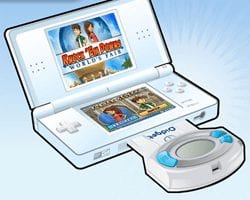
The Bayer Didget Meter For Kids is a nice addition to any child who has diabetes because it can make testing fun. It actually rewards a child for testing regularly through free games on their Nintendo DS or Nintendo DS Lite.

Bayer Didget Meter For KidsBayer Didget Meter For Kids: Children get diabetes just like adults. In fact, studies suggest that more children are developing diabetes a lot earlier on. According to the American Diabetes Association, about 215,000 children and adolescents under that age of 20 have either type 1 or type 2 diabetes and one in every four hundred children have type 1 diabetes.
Having diabetes at any age can be difficult but even more so as a child. Many children don’t want to brush their teeth or take a bath so when it comes to getting pricked by a needle it can almost become impossible to endure. However, thanks to a new meter designed for children, testing couldn’t be more fun.

The Bayer Didget Meter For Kids is a nice addition to any child who has diabetes because it can make testing fun. It actually rewards a child for testing regularly through free games on their Nintendo DS or Nintendo DS Lite. It is the only blood glucose monitor that plugs directly into the gaming system.

Here are some of its great features:

  • No coding technology
  • Has same accuracy as Bayer’s Contour Blood Glucose Meter
  • Calculates reward points that children can use to cash in to unlock new levels and buy in-game items
  • Includes Knock’em Downs: World Fair video game and mini game arcade

The Bayer Didget Meter For Kids is great for any children who had diabetes because what better way to get your child to test consistently than to offer a reward? It’s a perfect piece of technology and children are already falling in love with and can’t wait to test again.

The monitor itself has two modes.

First off, there is the basic mode. All you have to is insert a testing strip and test. Here are some of the basic modes features:

  • 5 second testing time
  • Has a 480 test result memory
  • Has large, easy-to-read display screen
  • Ready-to-test straight out of the box
  • Auto detection of control solution
  • Has 14-day average
  • Has 7-day summary

The second mode is known as the advanced mode and it basically works the same as the basic mode but there are some differences.  Here are some of the advanced modes features:

  • Customizable features
  • Supports the need for personalized treatment goals
  • HI/LO test result summary shows test above and below your child’s glucose target level
  • Pre and post meal marker can helps kids to identify tests that are taken before or after they have eaten
  • Selectable post-meal reminder can help children to remember that they need to test after they have eaten
  • Has 7,14 and 30 day averages

The Bayer Didget Meter For Kids can be a wonderful addition to help your child to remember that they need to test. While it does add the “fun” bonus of being able to earn rewards, it also helps your children when their fight against diabetes. By checking their glucose regularly, they can’t help fight off any diabetic complications that might arise in the future. It is a win, win situation.

Bayer A1C Now Self-Check System

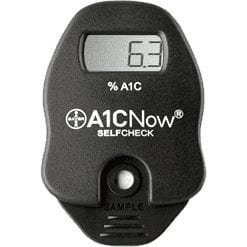
The Bayer A1C Now Self-Check System is a great monitor that will monitor your A1C level and that’s important because with even as much as 1 percent reduction, many issues and complications that diabetic patients face can be lowered.

Bayer A1C Now Self-Check SystemBayer A1C Now Self-Check System: If you have diabetes then you have to check your blood glucose quite regularly and there is no better way to check it accurately and regularly than to have an updated blood glucose monitor.

There are a lot of issues with out-dated blood glucose monitors and one of those issues is irregular readings. If you monitor is old, it may give off readings that just don’t sound right and you may actually be making your diabetes much worse.

Another major concern to those using glucose monitors is the pain that they feel with each prick to measure their levels. It can actually be quite painful when you have to test 3-4 times a day.

The last issue that many people face when it comes to their monitor is the fact that it becomes more of a hassle to use than other glucose monitors today. You have change out lancets every time you test, you have to clean up the monitor itself, not to mention the fact that you have to place the testing strip into that tiny opening in the monitor. It all becomes a huge hassle that many people tire from quickly. You also must write down each and every reading and many people tend to forget that part.

With the Bayer A1C Now Self-Check System, all the problems are thrown to the wayside. You are getting one of the most highly advanced monitors on the market and what can be better than that?

First off, this monitor measures your A1C level which is very important when looking at diabetes.  A1C measures your average blood glucose level over the past 2-3 months, which is said to be very important and is recommended by the ADA (American Diabetes Association) to be below 7 percent. However, this monitor is not for daily use, it is used to look at the big picture when it comes to measuring diabetes as a whole but is still very effective.

Here are some of its great features of the Bayer A1C Now Self-Check System:

  • Easy to use
  • Portable
  • Needs only a small sample of blood
  • Gets results in five minutes
  • Can be used with a flexible spending account
  • Gives on the spot feedback to patients
  • Needs no maintenance
  • Lab accurate
  • National Glycohemglobin Standardization Program Certified
  • Allows face to face communication with patients
  • Bayer A1C Now Self-Check System kit includes: 1 A1C Now Self-Check Monitor, 2 single cartridges, 2 shaker kits, 1 quick reference guide, 1 overview and helpful hints booklet, 1 instructional DVD and 1 extra lancet.

The Bayer A1C Now Self-Check System is a great monitor that will monitor your A1C level and that’s important because with even as much as 1 percent reduction, many issues and complications that diabetic patients face can be lowered.

Measuring your blood sugar level as a diabetic is very important and many cannot always measures theirs as much as they would like but with more advanced products coming out all the times, everyone is sure to be able to get an accurate reading so that diabetic complications are no more of an issue.

V-Go Disposable Insulin Device for Type 2 Diabetes

The V-Go has been described as a disposable insulin source, and there are two different medications that have been approved for use with the device – Humalog and NovoLog.

V-Go Disposable Insulin Device for Type 2 DiabetesV-Go Disposable Insulin Device for Type 2 Diabetes: In most instances type 2 diabetes can be controlled through diet and exercise, plus oral medication when needed. There are times, though, when these three critical ingredients aren’t enough to control the patient’s blood sugar levels. When that occurs, the patient is advised to add injectible insulin in their regimen to control their diabetes. The V-Go has been available since March 2011 in the United States, as it was given approval by the Food and Drug Administration in December 2010.

The V-Go has been described as a disposable insulin source, and there are two different medications that have been approved for use with the device – Humalog and NovoLog.

The device is described as small, 2-1/4” by 1-1/3” inch by 0.5”, and would weigh approximately 1 ounce when filled with insulin. The patient would apply a new V-Go to the skin daily for one 24-hour period. The V-Go would be inserted into the skin; the device would be worn next to the body underneath one’s clothing, so it would not be visible to the naked eye. The device is not electronic and has no moving parts. It will deliver 30 to 40 units of insulin over a 24-hour period. The device is designed for the continuous subcutaneous (under the skin) release of insulin. The V-Go provides a pre-set basal rate of insulin, plus an added dosing at mealtime, which would alleviate the need for multiple daily insulin injections. “The device was engineered to simplify basal-bolus insulin therapy for the millions of people suffering from type 2 diabetes.”

The device was recently approved for use in the United Kingdom for those suffering from type 2 diabetes. It received the CE Mark approval for sale in the European Economic Area.

Accu-Chek Aviva Nano

The Accu-Chek Aviva Nano is a glucose monitor that is helping to take the pain out of pricking, is easy to use and also gives fast results. So far many diabetic have started using this glucose monitor and have very much liked what they’ve seen. In fact, it is one the most popular glucose monitors on the market today.

Accu-Chek Aviva NanoAccu-Chek Aviva Nano: Monitoring your blood sugar levels is very important and when a diabetic patient is unable to check their blood sugar, it can cause some other health issues such as retinopathy or neuropathy.

While it is best for diabetic patients to check their blood sugar regularly, some patients cannot because their blood sugar monitor does not provide enough stability to take regular, accurate readings. While this is one of the most common complaints among diabetic patients when they talk about their blood glucose monitors, there are other complaints. For example, many people complain about painful pricks and slow readings.

Thanks to newer technology however, these complaints are becoming obsolete. The Accu-Chek Aviva Nano is a glucose monitor that is helping to take the pain out of pricking, is easy to use and also gives fast results. So far many diabetic have started using this glucose monitor and have very much liked what they’ve seen. In fact, it is one the most popular glucose monitors on the market today.

Let’s start addressing some of the complaints that many people have with their old glucose monitor to see just how awesome the Accu-Chek Aviva Nano is.

Accu-Chek Aviva Nano is Easy-To-Use

Many patients complain that their glucose monitors are not very easy-to-use but the Accu-Check Aviva Nano is very easy to use.

With many glucose monitors, the lancets cause a lot of gruff with individuals because they must be replaced every time an individual tests their blood sugar. However, with the Accu-Chek Aviva Nano, a simple device makes the lancet process much easier. A 6-needle drum fits into the applicator that supplies an individual enough needles to test through-out the day. While it is suggested to switch to a different needle every time an individual tests it is common for one needle to be used more than once. It also saves on money when buying products as well.

Painless Blood Sugar Testing

Based on the easy-to-use lancet device, the pain issued through the prick is a lot less than other glucose meters.

A Reliable Meter

  • Memory-The Accu-Chek Aviva Nano can hold up to 500 results with time and date.
  • Power- the Accu-Chek Aviva Nano runs on 2000-test 3-volt lithium coin cell battery capability.
  • Chip- An insert-able chip helps to keep important information is stow and allows for information to be brought up quickly.

Other Important Features

  • Less wasteful based on other glucose monitors on the market
  • Much faster to use

The Nano comes with an understandable easy-to-use manual. Be sure to read the Accu-Chek Data Management Tools section, as it comes in handy the most.

While there are so many great things to say about this awesome monitor, this wouldn’t be the best review if I didn’t mention some of the negative things. One negative issue that most people endure is that malfunctions that happen with both cold and hot temperatures. However, these are the same issues that happen with most electrical and battery-ran devices. At 8 degrees Celsius, the monitor will stop working and in high temperatures, the monitor will malfunction.

However, that seems to be the only negative thing to say about the Accu-Chek Aviva Nano, everything else is positive.

Actos for type 2 diabetes to go Generic in 2012

The maker/seller of Actos is Merck, and Merck’s patent on Actos will expire in August 2012 which opens the door for a generic form of the medication.

Actos for type 2 diabetes to go Generic in 2012Actos for type 2 diabetes to go Generic in 2012: Actos, a medication commonly used in the treatment of type 2 diabetes, will cost less in 2012 when its generic form will become available as Pioglitazone. The maker/seller of Actos is Merck, and Merck’s patent on Actos will expire in August 2012 which opens the door for a generic form of the medication. 2012 is the scheduled date, but this date can deviate due to arrival dates, litigation or regulatory issues. For now, though, the hope is that Actos will become available in generic form in August 2012.

With the high cost of any medication that is not available in generic form, the purses of American consumers have been hit hard over the past years with newer and better medications to treat their illnesses. Drug companies spend many years researching and developing a drug for human consumption with as few side effects as possible. These years of research and development are a costly endeavor. The only way for the companies to recoup their expenses in developing the medications is through the patents that they have over the medication for a specified number of years. Once the patent has expired, the generic form of the medication becomes available through a variety of pharmaceutical companies. These generic forms of medication cost a great deal less.

Other medications with their patents ending within the next 14 months are as follows:

October 2011 – Zyprexa (schizophrenia/bipolar)
November 2011 – Lipitor (high cholesterol)
March 2012 – Lexapro (depression)
March 2012 – Seroquel (schizophrenia/bipolar)
March 2012 – Avapro/Avalide (high blood pressure)
April 2012 – Provigil (narcolepsy)
May 2012 – Plavix (clot prevention)
July 2012 – Tricor (high triglycerides)
August 2012 – Singulair (asthma/allergies)
August 2012 – Actos (diabetes)
September 2012 – Diovan (high blood pressure)
September 2012 – Geodon (bipolar disorder)
November 2012 – Lidoderm (pain patch)
December 2012 – Atacand (heart failure)
March 2013 – Lovaza (high triglycerides)
August 2013 – Tremodar (brain tumors)

As the cost of medication has risen, many people have cut back on their expenses by not taking their prescribed medications or reducing their dosage. This leaves the patient vulnerable to a medical emergency from which they may not survive. With the reduction in cost of any medication the patient may be taking, the easier the financial hardship on the patient and the more likely the patient is to take their medication at the prescribed dosage.

Generic medications are the chemical equivalent of the original brand-name medication and work just as well for nearly all patients, and the cost of using a generic medication versus an original brand-name medication can be drastic. As an example, Protonix, a medication used for severe heartburn, went off patent recently. Protonix now costs on average $16.00 a month for a generic form of the medication whereas the original brand-name medication is around $170.00 per month. A huge difference.

With each original brand-name medication that goes off patent, that means bigger and better savings for the consumer.

Diabetes Cure: Adult Stem Cells or Embryonic Stem Cells

Professor Efrat did his study with a Ph.D. student, Holgen Russ, and in collaboration with Professor Nissim Benvenisty and Ori Bar-Nur from the Hebrew University, and the results were recently published in the journal Cell Stem Cell.

Diabetes Cure - Adult Stem Cells or Embryonic Stem CellsDiabetes Cure: Adult Stem Cells or Embryonic Stem Cells: A cure for type 1 diabetes has long been thought to eventually come from the replacement of the beta cells within the pancreas that produce insulin, a hormone that is necessary for life. These beta cells are contained with the Islets of Langerhans in the pancreas, and their job is to make and release insulin and control the level of glucose in the blood. There has been much controversy surrounding the use of embryonic stem cells (cells that are derived from an early-stage embryo) from a moral and ethical point. In some instances, the mere mention of stem cells taken from an embryo can cause an uproar in regards to abortions.

Embryonic stem cells are easy to grow in the lab, but these embryonic stem cells are difficult to turn into pancreatic beta cells that produce the needed insulin.

Embryonic stem cells are pluripotent cells and can generate all cell types in the body, whereas adult stem cells are multipotent cells and can only produce a limited number of cell types.

Professor Shimon Efrat of the Tel Aviv University, Department of Human Molecular Genetics and Biochemistry at the Sackler Faculty of Medicine, has done a study with the adult pluripotent stem cells. These adult-derived stem cells could pave the way for new treatment in diabetes, states Professor Efrat. Professor Efrat added that, “these induced pluripotent stem cells represent an embryonic-life state. To some degree, he found, the cells retain a ‘memory’ of what they once were – when created from pancreatic beta cells, the cells responsible for the production of insulin, these pluripotent cells prove more efficient than their embryonic counterparts in creating insulin-producing cells.” Professor Efrat stated, “This discovery promises to advance the development of cell replacement therapy for diabetics, possibly leading to an effective alternative to organ transplants.” He further stated that, “When generated from human beta cells, pluripotent stem cells, these memory cells act as though they are receiving a prompt from their past life; the cells already have some understanding of their purpose, making them more efficient in generating beta cells.”

There are 3 million Americans with type 1 diabetes. For a cure to type 1 diabetes (a condition difficult to control on a day-to-day basis and that many times results in subsequent severe complications) some people have opted from an organ transplant to replace those insulin-producing cells. Like with any organ transplant, it is a difficult road to maneuver – a long wait list and a shortage of organ donors. This process can take many years. Professor Efrat noted, “The ratio of donors to potential recipients is about one to 1,000. A better option is sorely needed, and stem cells present a viable hope for the future.”

Professor Efrat did his study with a Ph.D. student, Holgen Russ, and in collaboration with Professor Nissim Benvenisty and Ori Bar-Nur from the Hebrew University, and the results were recently published in the journal Cell Stem Cell. “This discovery that was made by Professor Efrat and his fellow researchers was licensed to a start-up company that promotes the research and development of technology of innovative treatments for diabetes.”

Is Tight Blood Sugar Controls Best for Type 2 Diabetes?

This is the result of a report that was published by the German Institute for Quality and Efficiency in Health Care (IQWIG) that was recently issued.

Is Tight Blood Sugar Controls Best for Type 2 DiabetesIs Tight Blood Sugar Controls Best for Type 2 Diabetes: Should persons with type 2 diabetes keep their blood sugar levels under strict control, resulting in their A1C levels being the same as a person who does not have type 2 diabetes?

There are known benefits to keeping the blood sugar levels under tight control, but there is also a down side known as “insulin reactions” (hypoglycemia).

A true answer to the benefit of extremely tight control is still unknown.

This is the result of a report that was published by the German Institute for Quality and Efficiency in Health Care (IQWIG) that was recently issued. This compilation report was issued at the request of the Federal Joint Committee (G-BA). IQWIG was requested to prepare the report in a rapid form, meaning no preliminary reports were published. The study involved IQWIG using a randomized controlled trial comparing two treatment strategies in patients with type 2 diabetes. The “test” group measures’ goals were to lower blood sugar levels to near normal levels. In the “control” group measures’ goals there was no attempt to keep blood sugar levels at normal levels. With these two criteria in mind, the goal was to assess the benefit or harm of the interventions for “mortality (all-cause mortality), late complications of diabetes (heart attacks, strokes, damage to the kidneys or eyes, etc.), as well as quality of life.”

IQWIG included seven studies. In those seven studies, 28,000 had participated. Four studies had already been conducted between the 1960s and the 1990s, and the remaining three were after the year 2000. The ethnic origin was specific, Japan, and in some of the studies medications were used that are no longer in use. Rosiglitazone was listed as one such drug.

IQWIG analyzed these studies and their conclusion was that there were no differences between the two groups of “relevant aspects of treatment.” There was no identifiable “advantage or disadvantages found neither for all cause mortality nor for fatal heart attacks, (fatal and non-fatal) strokes, end-stage renal disease (and its pre-stages), amputations, or pre-stages of blindness. Insufficient data were available for the outcomes of quality of life and blindness.”

There were indications that patients with type 2 diabetes did benefit from extremely normal blood sugar levels in the “non-fatal heart attack” area, and it was in this area only. As well, those with the extremely normal blood sugar levels had indications of severe insulin reactions (hypoglycemia) as well as other serious events.

Jurgen Windeler, Director of IQWIG, commented on the current report: “It is quite astonishing: individual interventions, particularly drugs, have in part been well investigated in studies; however, we know relatively little about the advantages and disadvantages of treatment strategies. If doctors are faced with the question as to what they can specifically offer to their diabetes patients, whether they should lower blood glucose levels as much as possible, and in which patients this is a promising (or less promising) approach, they still do not receive satisfactory answers.”

In conclusion, the “few studies available do not allow reliable conclusions.”

Secret Link