Diabetic Medications

If you have been diagnosed with diabetes, then you are probably on a specific set of medications designed to control your condition and ward off conditions that are closely related to diabetes.  Doctors usually take into consideration factors such as a patient’s type of diabetes, age, other current conditions, and any other medication that they may be taking, when prescribing diabetic medication.  The most common and well known of these is insulin there are several other types of diabetic medications.  Although we will not be able to cover all of these, we will discuss some of the more common diabetic medications.

Diabetic Medications: If you have been diagnosed with diabetes, then you are probably on a specific set of medications designed to control your condition and ward off conditions that are closely related to diabetes.  Doctors usually take into consideration factors such as a patient’s type of diabetes, age, other current conditions, and any other medication that they may be taking, when prescribing diabetic medication.  The most common and well known of these is insulin there are several other types of diabetic medications.  Although we will not be able to cover all of these, we will discuss some of the more common diabetic medications.

Pioglitazone hydrochloride or Actos, as it is more commonly known, is used primarily in patients with type 2 diabetes.  Actos is used to decrease a person’s insulin resistance by improving sensitivity to insulin in the muscles and adipose tissues. Despite its benefits, Actos has been known to cause and/or increase an individual’s chances of having congestive heart failure.  So, if you are on Actos, it is important that you watch out for symptoms of congestive heart failure including excessive and/or rapid weight gain, dyspnea, or edema.

Lantus is most commonly used in individuals with type 1 diabetes.  While regular insulin is a natural substance, Lantus a manmade solution of insulin glargine and is taken as an injection. Unlike regular insulin it lasts longer and begins to work more slowly.  Lantus lowers your blood sugar by replacing the insulin that your body does not produce, instead of helping your body use sugar productively like natural insulin.  Hypoglycemia is one of the most common conditions that have been directly linked to Lantus.

Rosiglitazone maleate also known as Avandia is typically used in patients with type 2 diabetes.  Avandia is used to help lower your blood sugar, by facilitating your body’s natural response to insulin.  If you are showing signs of congestive heart failure it is important that you know that Avandia is not recommended for people like you.  The clinical studies for Avandia are contradicting and some have even compared Avandia to a placebo.

Like the other medications mentioned, Metformin or Glucophage is used to lower blood sugar by restoring your body’s response to the insulin that you naturally produce.  However, unlike the medicines mentioned above, Glucophage also decreases the amount of sugar that your liver makes and that your intestines absorb.  It is important to note that the main condition to be directly linked to Glocophage is Lactic Acidosis.  Yet, this is pretty rare.  Side effects most commonly caused by Glucophage are diarrhea, vomiting, nausea, and indigestion.

Sitagliptin also known as Januvia is commonly used with other diabetic medications, such as Glucophage, when it has not proven to be as effective as the doctor had hoped.  Januvia is mainly used in patients with type 1 diabetes.  People who are taking or may start taking Januvia should be cautious if they have or are showing signs of renal failure and/or hypoglycemia.

Prandin the common name for Repaglinide typically used in individuals with type 2 diabetes.  Prandin assists the body by getting it to produce more insulin naturally.  Hypoglycemia is one of the main conditions that have been directly linked with Prandin.  However, it is important that women who are pregnant, nursing, or plan to get pregnant speak with there doctors first and take Prandin with caution.

There are many other diabetic medications.  Yet, not only do these medications come with their own warnings, they may also have an effect on other medications that you may be taking.  However, diabetes is a serious condition; so do not start or stop any type of diabetic medication without speaking with your doctor first.

Cincotta’s Season: Getting a Drug to Market

Many of us are willing to spend some time working on a project that will have an expected outcome. We can spend a weekend working on the lawn because we know it will have a conclusion and we can enjoy the benefits while engaging in something new.

Many of us are willing to spend some time working on a project that will have an expected outcome. We can spend a weekend working on the lawn because we know it will have a conclusion and we can enjoy the benefits while engaging in something new.

Athletes train to compete in a sport knowing that there is a ‘season’. There is a fixed start and stop date.

Teachers plan for a school year knowing they have certain objectives to meet in order to pass along specific skills to their students. This too will come to an end.

What if a season was 28 years long? Would athletes willingly sign up? Would they be able to endure? Would teachers enjoy having the same group of students for 28 years? Would the students enjoy the same class for so long?

Anthony Cincotta had to learn if he was made of the right stuff in living through his 28-year season.

According to Boston.com Cincotta was a graduate student 28-years ago, “Working on Syrian hamsters. Intrigued by how the animals slip from their lean summer condition into a fat, nearly prediabetic state before their winter hibernation, he had found a way to tinker with their brain chemistry and effectively reset their metabolism. Cincotta was certain that he had discovered something big, and he wondered: Could he do the same thing in people?”

Cincotta’s brother Manny was his inspiration for a very personal project. Manny died from Leukemia. Cincotta’s project involved creating a drug to help treat diabetes. After 20 years of work the Food and Drug Administration (FDA) declined to approve the drug for use in America.

Twenty years. More time than Cincotta had been in school. This was roughly half of his life dedicated to a season of developing a drug that was denied by the FDA.

After a series of mergers, acquisitions and buy-backs Cincotta once again owns the rights to a drug known as Cycloset. This time he has FDA approval.

The Boston.com report indicates, “Dr. Martin Abrahamson, medical director at the Joslin Diabetes Center, said the drug is not as effective at lowering glucose as other diabetes drugs on the market. He also said that a barrier to the widespread use of the drug might be one of its side effects, nausea, and noted that in a clinical trial of the drug, nearly half of the Cycloset-treated patients stopped taking the medication early.”

While this may sound negative Cincotta is used to delays, setbacks and negative feedback. However, he also has some positive backing as doctor’s that participated in the clinical trial express enthusiasm for the drug because unlike other diabetes related drugs it does not increase the risk of heart disease.

Because of Cincotta’s work with the brain chemistry of hamsters some doctors are intrigued by the neurologic component to Cycloset and its potential in treating diabetes.

Cincotta’s season was a long one. Now he waits to see if his work will be embraced in the treatment of diabetes.

Interestingly the wait endured by Cincotta and the continued pursuit of excellence that marked his journey really isn’t remarkably different than the struggle many diabetics face everyday. Their season isn’t short-term and the results are important. Like Cincotta they stick to their plan and continue working toward a desired result (improved blood glucose and a better quality of life).

Here’s to patient endurance for all.

A Set Aside Diabetes Medication May Make a Huge Comeback

In the history of medical science there have been numerous medications that were designed for one purpose, yet found success treating something entirely different. This is true of the drug Viagra and it may be true of Fenofibrate (brand names include Antara, Fenoglide, Lipofen, Lofibra, TriCor, Triglide).

In the history of medical science there have been numerous medications that were designed for one purpose, yet found success treating something entirely different. This is true of the drug Viagra and it may be true of Fenofibrate (brand names include Antara, Fenoglide, Lipofen, Lofibra, TriCor, Triglide).

This drug was designed to prevent heart disease. Long-term research shows that it did not work effectively to take care of this issue in a preventative way. What this ultimately means for most drugs is they would be set aside and rarely prescribed. In most cases they are pulled from the shelves and discontinued. Fenofibrate may be making a comeback, but not as preventative medicine for heart disease.

Research based in Australia, New Zealand and Finland followed 9,795 patients and discovered that the use of Fenofibrate may actually be a potent drug that seems to significantly reduce the potential of amputations among Type 2 diabetics. This study was conducted over a five-year period.

Current statistics indicate about 10% of Type 2 diabetics will lose at least a part of a lower limb to amputation. Fenofibrate could reduce the instance of the need for invasive surgery and long-term rehabilitation.

The truth is this information was buried in a 2005 study that was designed to prove or disprove Fenofibrates ability to serve as a heart drug. When the results showed it did not, the study was set aside. A new look at this study revealed findings that had been overlooked because it was not the original intent of the study.

Some amputation risk groups saw as much as a 50% decline in amputations when compared to others who were not taking Fenofibrates. The Lancet journal interpreted these findings; “Treatment with fenofibrate was associated with a lower risk of amputations, particularly minor amputations without known large-vessel disease, probably through non-lipid mechanisms. These findings could lead to a change in standard treatment for the prevention of diabetes-related lower-limb amputations.” Patients at risk for a first time amputation saw a 36% decrease when using Fenofibrates.

The Lancet also reported, “Fenofibrate has previously been shown to reduce macrovascular and microvascular complications of type 2 diabetes.”

This report suggests that a drug that has already proven helpful to Type 2 diabetics may actually provide greater support and amputation prevention than originally thought.

Medical science has moved toward statin-based drugs to help patients prevent heart disease. Fenofibrates could realistically be used to provide new support it had not previously been given credit for when used in conjunctions with statins.

As medical science moves forward in learning how drugs interact with our bodies and work to provide support for greater health the onus will still remain on the topic of education. In many cases diabetes can be avoided, prevented or delayed by participating in a lifestyle alteration that includes understanding how food interacts with your body and why physical activity is important in the process of effective glucose control.

In many cases a less active lifestyle is the norm in the 21st century. It can take concentration and dedication to buck the normal trend of a sedentary lifestyle in order to embrace one that includes more activity and a healthier variety of food. The end result is almost always positive and can often be managed without drugs.

However, when a diabetes diagnosis is given you will need to consider the possibility of a medical regimen to help you reach goals in managed care. The effects will be even greater when you become an active partner in your own care.

The Metformin Connection: Dead Fish

If you thought your diabetic medication smelled like dead fish – you’re not alone. New research seeks to determine if the smell of the medication may actually contribute to a common side effect – nausea.

If you thought your diabetic medication smelled like dead fish – you’re not alone. New research seeks to determine if the smell of the medication may actually contribute to a common side effect – nausea.

The medication is known as Metformin, which WebMD describes as, “an oral drug commonly used to treat type 2 diabetes. [It] generally has few serious side effects, but gastrointestinal upset and nausea are common. Although these effects have been well documented in studies, researchers say one unique characteristic of the pills may have been overlooked as a potential cause of the nausea: their strong fishy odor.”

The generic equivalent of this drug is known as Glucophage. WebMD describes this diabetic drug. “Metformin is used with a proper diet and exercise program to control high blood sugar in people with type 2 diabetes (non-insulin-dependent diabetes). Controlling high blood sugar helps prevent kidney damage, blindness, nerve problems, loss of limbs, and sexual function problems. Proper control of diabetes may also lessen your risk of a heart attack or stroke. Metformin belongs to the class of drugs known as biguanides. It works by helping to restore your body’s proper response to the insulin you naturally produce, and by decreasing the amount of sugar that your liver makes and that your stomach/intestines absorb.”

So while this drug serves a great purpose in the control of diabetes it can be disheartening when the medication cannot be taken because of issues related to its odor.

No official documentation exists as to the number of diabetics who have stopped or refused to use Metformin because of its distinctive smell, however there is plenty of online evidence that individuals are staying away from the drug for this very reason.

In a recent report, published in the Annals of Internal Medicine, researchers describe, “two cases in which patients discontinued use of generic metformin because of what they described as the nauseating smell of the drug,” according to WebMD.

The odor of this drug has even been liked to, “old locker room sweat socks”. While it is not conducive to positive image the odor is only linked to the immediate release version of the prescribed drug.

If you have an issue with the smell of your metformin or glucophage you should inquire about the availability of “film-coated, extended-release formulation of metformin as an alternative.”

Doctors will benefit from your honesty about the drug. If you are nauseated because of the smell this information will have a different meaning for them than if you experience stomach upset as a side effect of prescribed use. By knowing the exact reason for your discomfort your physician may be able to provide a solution.

“First synthesized and found to reduce blood sugar in the 1920s, metformin was forgotten for the next two decades as research shifted to insulin and other anti-diabetic drugs. Interest in metformin was rekindled in the late 1940s after several reports that it could reduce blood sugar levels in people, and in 1957, French physician Jean Sterne published the first clinical trial of metformin as a treatment for diabetes. It was introduced to the United Kingdom in 1958, Canada in 1972, and the United States in 1995. Metformin is now believed to be the most widely prescribed anti-diabetic drug in the world; in the United States alone, more than 40 million prescriptions were filled in 2008 for its generic formulations.” (Source: Wikipedia)

Avandia Under Fire

What if you knew that by adding a diabetic drug to your daily medical regimen you increased your risk of heart failure by more than 50%? Would you take the drug? One California County is taking a drug company to court to seek the removal of the drug from circulation.

What if you knew that by adding a diabetic drug to your daily medical regimen you increased your risk of heart failure by more than 50%? Would you take the drug? One California County is taking a drug company to court to seek the removal of the drug from circulation.

According to VOAnews, “The [Santa Clara County] lawsuit was spurred by a report on the drug released by the U.S. Senate … That report accused the drug company of withholding information about side effects of serious heart problems, including death.  At issue now is whether Avandia should be taken off the market.”

The VOAnews report stated that, “In 2007, Dr. Steven Nissen published a study showing that those taking Avandia had a 43 percent higher risk of having a heart attack and a 64 percent greater chance of dying from a heart attack than those not taking the drug. ‘We’ve been warning about this for two and a half years,’ he said. ‘There really isn’t a good reason for physicians to continue to prescribe the drug. It’s time to get it off the market.’”

Dr. Yasser Ousman at Washington Hospital Center disagrees. Ousman is quoted by VOA as saying, “There are a number of drugs that have been tested in these individuals and Avandia is one of them, and actually, it is quite effective in improving the blood sugar, in normalizing the blood sugar or delaying the occurrence of diabetes in these individuals.”

Ousman further suggests, “If you look at the large studies, that were published over the last several years, including a large number of patients comparing Avandia to a placebo or other drugs, there was actually no increase in that risk.  That risk was based on smaller studies.”

Basing his findings on more than 40 clinical trials, Nissen said, “What bothers me the most is that every month that goes by, more people are harmed by a drug that people simply don’t need.”

The Food and Drug Administration have planned further review of the drug in July, but has cautioned against the discontinued use of Avandia without the advise of your primary health care provider.

The case against GlaxoSmithCline in California has to do with what is claimed as false advertising. There is the suggestion that the drug manufacturer knew the drug could cause heart issues long before they ever issued any warnings that this could be a side effect of using the medication. A Senate report even suggests that the FDA may bear some responsibility in the lack of information passed on to patients.

The VOAnews article further indicates, “A study on Avandia funded by GlaxoSmithKline published last year, found no increase in heart attacks. But it found a significant increase in the risk of heart failure where the heart cannot pump enough blood to the organs or muscles. A number of cases resulted in hospitalization or death.”

Law.com states that Santa Clara County in California “Wants the company to pay back money from all sales of Avandia in California since 1999, as well as pay restitution for medical treatment provided to Avandia users who suffered heart problems.” The county has spent around $2 million on the purchase of Avandia as part of it’s own health program over the years. The lawsuit may have been precipitated by the fact that Santa Clara County has a public hospital and the County is seeking to make decisions in the best interest of their municipal health care facility as well as the patients who use their hospital.

Islet Cell Transplantation

Type 1 diabetes is a very serious disorder that impacts the day to day existence of the people that suffer from it. While there are many effective treatment options for type 1
diabetes there is still no cure. While there are several potential technologies on the horizon that promise to lessen or even eliminate the worst effects of the disease, such
as the closed loop insulin pump (sometimes inaccurately called an artificial pancreas) and pancreas transfers, the technology that holds the most promise is the islet cell
transplant.

Islet Cell Transplantation: Type 1 diabetes is a very serious disorder that impacts the day to day existence of the people that suffer from it. While there are many effective treatment options for type 1 diabetes there is still no cure. While there are several potential technologies on the horizon that promise to lessen or even eliminate the worst effects of the disease, such as the closed loop insulin pump (sometimes inaccurately called an artificial pancreas) and pancreas transfers, the technology that holds the most promise is the islet cell transplant.

The Islets of Langerhans are microscopic bodies in the pancreas that are responsible for creating and secreting a number of important enzymes, the most well known of which is insulin. These bodies are what fail in a diabetic. In type 2 diabetes, they may produce insulin in smaller amounts than what are necessary (this is not always true–there are also other causes of type 2 diabetes) and they fail altogether in the much more serious type 1 diabetes. Type 1 diabetics must monitor their blood glucose levels many times and day and add insulin as needed, typically through injections or an insulin pump.

There are several types of cells in the Islets of Langerhans. The beta cells are responsible for the production of insulin. The hope for Islet cell transplant is that the beta cells from the donor will become active in the recipient’s pancreas and begin to produce and secrete insulin in the new host. This technique has been successful in limited testing–if it can be refined and made available to a much wider audience, it will be the elusive cure for diabetes that have been sought for years. While testing is in its very early stages, some of the published results have been promising indeed. Many of the recipients have gone for a year or more without having to take a single supplemental dose of insulin. The tests are underway and hopefully the future will hold many more such promising results.

One of the real hurdles that must be overcome before islet cell transplants can be made a viable option for many sufferers of type 1 diabetes is the problem of rejection. Every cell in a human body is covered with unique markers that indicate that the cell is native to the body and not an outside pathogen. Cells that do not contain these individual specific markers are attacked by the immune system which treats them as invaders. With any kind of transplant, the problem of rejection is a very real issue. Since the transplanted cells will have different markers, the immune system will attempt to destroy them since they appear to be outsiders (indeed, they are). The only way to currently prevent rejection is to use medications that decrease the activity of the immune system. This clearly has drawbacks. First, we need our immune systems function properly to keep us health. Those who have a decreased immune system are likely to suffer from a wide range of problems, including frequent cold and flu infections, a high occurrence of mouth and stomach ulcers, higher rates of general infections, etc. The complications that accompany rejection suppression will mean that islet transplant surgery will only be appropriate for those whose diabetes symptoms are worse than the side effects that they will incur because of the required immunosuppressive therapy.

Another problem with the current state of islet transplants is that there simply are not enough donors available to meet the needs of even a small percentage of all type 1 diabetics. Since there will surely be overwhelming demand for the procedure once some of the details are worked out, scientists are currently investigating ways to artificially produce functional islet cells.

Pancreatic Islets

Almost 80 years ago, Dr. Frederick Banting published a report about use of pancreatic Islets to treat diabetes. He obtained those Islets from the pancreas of a dog. By first tying-off that pancreas, he eliminated the digestive enzymes that would otherwise have destroyed the insulin in the Islets.

Pancreatic Islets: Almost 80 years ago, Dr. Frederick Banting published a report about use of pancreatic Islets to treat diabetes. He obtained those Islets from the pancreas of a dog. By first tying-off that pancreas, he eliminated the digestive enzymes that would otherwise have destroyed the insulin in the Islets.

Following the publication of that report, diabetics could hope for a way to replace the insulin lacking in their system. Biochemists were able to extract insulin from the pancreas of an animal. That insulin could then be prepared for injection into a diabetic patient. At that time, doctors could only dream about transplanting Islet cells into a diabetic patient.

Doctors have since learned that the Islets contain several types of cells. Among those various Islets cells, only the beta cells have the ability to make insulin. In the 1970s, a group of medical researchers began to look for a way to transplant beta cells into diabetic patients. Gradually, their research produced significant results.

Dr. Bernard Hering at the University of Minnesota transplanted Islets cells from pigs into monkeys. He published a report about that transplantation in Nature Magazine. Then in June of 2000, the world of medicine learned about a more advanced type of Islet transplantation. Doctors at the University of Alberto in Edmonton, Canada had transplanted Islets cells into human diabetic patients.

The Canadian doctors published the details of their transplantation in The New England Journal of Medicine. They followed that initial report with other reports about the ability of the transplanted Islets to maintain production of insulin. Those follow-up reports indicated that 10% of the 65 patients given the transplanted Islets remained free of a need for insulin five years later (in 2005).

The follow-up report included some other important information. A number of the patients who had received the transplanted Islets found that even though they later needed to receive insulin, they did not need as much insulin as they had prior to the transplantation. Moreover, those patients who had to resume their use of insulin found that after the transplantation they were able to maintain a more stable glucose level.

Among the patients who had received the transplanted Islets, doctors observed something that related to another problem, a problem that challenges many diabetics. Often a patient with diabetes develops what is known as “hypoglycemia unawareness.” When a diabetic develops that condition, he or she can not detect evidence that his or her body needs sugar. Symptoms of “hypoglycemia unawareness” declined among those patients who had received the transplanted Islets.

After medical doctors learned about the results of the Canadian experiment, they studied carefully the procedures used by those Canadian doctors. A number of doctors wanted to replicate the experiment conducted at the University of Alberto. Doctors who hoped to repeat that experiment learned that they needed to follow the following procedure.

The Canadian doctors had taken Islets cells from deceased organ donors. They had prevented destruction of the beta cells by using special enzymes during the removal of the Islets cells. They had then purified and processed those beta cells. Those purified and processed cells were given to a radiologist.

The radiologist used both X-rays and ultra sound to guide a plastic tube through the upper abdomen of the patient who was to receive the transplanted Islet cells. Once safely through the abdomen of that patient, the plastic tube was inserted in the patient’s portal vein (a vein from the liver). The radiologist then infused the Islets cells into the tranquilized patient.

The radiologist did not infuse just a couple cells into each patient. Doctors had determined the number of Islets “equivalents” needed by each patient who was supposed to get some transplanted Islets cells. The doctors had based their determination on the patient’s body weight. The Canadian doctors had found that a diabetic needs 10,000 Islets “equivalents” for every kilogram in his or her body weight.

Following the performance of such a procedure, doctors could expect the transplanted Islets cells to produce insulin for a at least 14 days. There were, as shown by the data in the published report, some patients who produced insulin for far longer than that short, 14 day period. Doctors have initiated a look at ways to refine the procedure used in Canada.

One refinement that has been presented to some medical professionals employs changes in the nature of the material infused into the patient. Doctors who tested this particular refinement put a special coating on the processed and infused Islet cells. Patients who received an infusion of Islets cells with the new coating experienced fewer side effects.

Prior to introduction of this new refinement, some patients had complained about mouth sores, GI problems, and increased infections. The physicians treating the patients with the Islets transplants had seen increases in the patients’ blood pressure and blood cholesterol. None of those side effects could be found among patients who got Islets cells with the new type of coating.

While some medical researchers have focused on delivery of the infused Islet cells, others have looked at how to improve patients’ acceptance of those cells. As in any transplantation, the transplantation of Islet cells demands the use of immunosuppressive drugs. Those drugs put limits on the body’s natural tendency to attack any foreign material within the body.

The Canadian doctors did not rely on the conventional immunosuppressive drugs when doing their Islets cells transplants. They used new drugs, drugs that proved able to enhance the patients’ acceptance of the transplanted cells. They administered those drugs according to a carefully selected pattern.

One drug, doclimszumab, was given to each patient by IV. The patient received that drug immediately after completion of the transplantation. The administration of that drug was brief; the patient did not need to be hooked to the IV for a lengthy amount of time.

Upon discontinuation of the doclimszumab, the patient received two other immunosuppressive drugs—sirulimus and tociclimus. The patient needed to continue taking those drugs for as long as the transplanted Islets cells produced a satisfactory amount of insulin.

Kidney Disease

When a doctor has a diabetic patient, he or she worries about the chances that that patient might develop microalbuminuria. Microalbuminuria is a type of kidney disease. The appearance of microalbuminuria indicates the occurrence in the kidneys of dangerous changes. Those changes lead to the development of proteinuria.

Kidney disease and diabetes. When a doctor has a diabetic patient, he or she worries about the chances that that patient might develop microalbuminuria. Microalbuminuria is a type of kidney disease. The appearance of microalbuminuria indicates the occurrence in the kidneys of dangerous changes. Those changes lead to the development of proteinuria.

Whenever a patient’s urine has an abnormally high amount of protein, that patient is said to have proteinuria. Proteinuria can be used to refer to large or small amounts of protein in the urine. The first signs of proteinuria manifest themselves when a diabetic patient has a low level of protein in his or her urine. Such a patient has microalbuminuria.

A physician can check for microalbuminuria by screening for the presence of albumin in a patient’s urine. That screening should conducted at least once a year. If done according to the traditional method, such a screening demands collection of urine for a period of 24 hours.

Diabetic patients should know that there is an alternative to the traditional screening method. That alternative employs spot testing of morning urine specimens. By using that alternative method, a laboratory can check the albumin to creatine ratio in the urine.

Diabetics should also understand the importance of watching for symptoms of proteinuria. Evidence of one or more symptoms should send the diabetic to the phone. The diabetic knows that he or she needs undergo a screening for albumin in the urine.

What are the symptoms of proteinuria? Foamy urine tells a diabetic that he or she has probably developed proteinuria. Foamy urine indicates damage to the glomeruli in the kidneys. A diabetic who sees that he or she has foamy urine should know that his or her urine puts out between 30 and 150 grams of protein every 24 hours. This is an abnormally high protein content for any 24 hour sampling of human urine.

Why does the presence of protein in the urine signal the occurrence of kidney damage? And why do patients with diabetes need to make an added effort to watch for evidence that such damage might have occurred?

A patient with diabetes needs to understand that 20% of the blood pumped by the heart goes to the kidneys. The kidneys perform a number of vital functions. The kidneys hold constant the concentration of ions in the bloodstream. They keep the volume of water in the blood constant. They remove wastes, and they insure maintenance of a proper acid/ base balance in the blood.

A well-functioning kidney can help to control the blood pressure in the body. A well-functioning kidney can hold steady the level of calcium in the body. In addition, the kidneys stimulate the production of red blood cells.

Each kidney has millions of tiny tubular structures called nephrons.. Each nephron is closed at one end. At that closed end, two twisted regions of the nephron have a hair pin loop between them.

Two capillary beds flow into and out of the twisted, closed region of the nephron. Those capillary beds form a connection much like the light bulbs in a series circuit. The capillaries in the nephron connect the arteries going into the kidney with the veins coming out of the kidney.

The construction of the vessels within the kidney allows completion of three different processes by an undamaged kidney. The kidney sends 20% of the plasma and non-cell elements in the blood into the nephron; there those elements pass through a filter. Diabetics should realize that there is glucose in the filtrate that emerges from that filter.

In a healthy kidney, the amount of any substance in the filtrate shows little fluctuation. The amount of any substance in the filtrate represents the product of the concentration of that substance in the blood and the rate of filtration in the kidney. Changes in the filtration rate, changes such as those that can take place in a diabetic patient, send a warning signal to the physician who had detected those changes.

After plasma from the blood has been filtered by the kidney, then the kidney starts to reabsorb from the lumen any components that must be returned to the blood. The kidney relies on proteins called transporters to carry out this re-absorption process. The set of transporters that grab the glucose molecules and return them to the blood also grab sodium molecules.

Diabetics must realize that the number of transporters in the kidney remains fixed. The body can not make extra glucose transporters, when blood full of glucose passes through the kidney. Among that fixed amount of transporters, each transporter can grab only a pre-determined number of molecules during any specific period of time.

As can be seen from the above paragraphs, the kidney’s ability to function properly can be hampered by the appearance of blood that contains a high concentration of glucose. The presence of that glucose forces the kidney to work harder and harder. Eventually, it fails to function as nature intended.

The kidney has one other function that insures removal of unwanted substances from the blood. The kidney can detect the presence of waste products and toxic materials in the blood stream. The kidney secretes those substances into the nephron. Those substances then pass into the urine.

The kidney of a diabetic notes the excess glucose in the bloodstream. The kidney interprets the flood of glucose as a sign that the body does not need that glucose. The kidney of a diabetic secretes the excess glucose into the nephron, thus sending it into the urine

If a diabetic has too much urine in his or her urine, that diabetic could develop an infected bladder. Bacteria love to grow in a warm environment, especially an environment with a rich source of nutrients. The warm, glucose-laden bladder of a diabetic can easily become an inviting home for bacteria.

In other words, patients who have diabetes need to be concerned more than just a possible kidney disease. They must also watch for signs that they might have an infected bladder.

Skin Disorders

A statistical analysis of diabetics in the United States has shown that up to one third of the patients with diabetes have or have had some type of skin disorder. Hypoglycemia can affect the skin, because the skin cells do not get the required amount of glucose. Whenever administration of insulin exceeds the amount needed for the metabolism of ingested carbohydrates, a diabetic can experience hypoglycemia.

A statistical analysis of diabetics in the United States has shown that up to one third of the patients with diabetes have or have had some type of skin disorder. Hypoglycemia can affect the skin, because the skin cells do not get the required amount of glucose. Whenever administration of insulin exceeds the amount needed for the metabolism of ingested carbohydrates, a diabetic can experience hypoglycemia.

Hyperglycemia can also cause skin disorders. Hyperglycemia changes the nature of the skin environment. Normally, bacteria in the air do not want to reside on the surface of the skin. The veracity of that statement changes whenever the skin gets an added amount of glucose. The extra glucose in the blood of a diabetic can make a once forbidding section of skin seem like the ideal place for bacteria or some other group of microbes to grow.

The term “skin disorders” does not refer to wrinkles or folds in the skin. An aging diabetic can expect to get some wrinkles. A once obese diabetic who has lost a great deal of weight can expect to have some folds in his or her skin. The term “skin disorders” refers to changes in the integrity of the skin.

Sometimes changes to the integrity of the skin can lead to alterations in the skin pigmentation. Sometimes an area of hyper-pigmentation can be associated with a skin lesion. By examining such a lesion, a physician can better tell whether or not it should be seen as a symptom of diabetes. The next paragraphs explain what the doctor checks for.

First, the doctor notes the location of the lesion. Is it on a bony surface? Is it somewhere where the bone rises above the level of the adjoining body parts? Diabetics often develop a lesion on the prominent bones of the back or the bones on the feet. Those are regions where the skin might feel particular stimuli—heat, cold or pressure from blunt objects.

Next the doctor studies the appearance of the lesion. Is it round or oval? Does it have reddish or brown color? Is the skin in the lesion scaly? If the answer to all three questions is “yes,” then the doctor has good reason to view the lesion as a symptom of diabetes.

Of course not every diabetic who has a skin disorder has a lesion such as the one described above. Some diabetics develop what is called Acanthosis Nigricans (AN).
A diabetes patient with AN will arrive at a doctor’s office with dark, velvet-like patches on parts of his or her skin. Those patches normally form on the back or the neck.

Unlike the other skin disorders, AN can not be viewed as an “equal opportunity disorder.” The percentage of diabetics with AN rises markedly among Hispanics, African Americans and Native Americans. While not all diabetics have the same chance for developing AN, all patients who have AN appear to have some type of insulin resistance.

The other skin disorders most often associated with diabetes are infections. An infection develops when the body attempts to destroy an invader, usually a microbe. Bacteria and fungi are the two types of microbes that have been shown to take advantage of any opportunity to grow and to reproduce in the body of a patient with diabetes.

Although one-celled organisms, bacteria are the most abundant and the most pathogenic of all the known microorganisms. Not all bacteria harm the body. Some bacteria perform useful functions within a healthy body. Other bacteria, what might be called “bad” bacteria, release harmful chemicals. Some of those chemicals digest body cells, and other chemicals disrupt specific body functions, causing disease, and sometimes death.

Bacteria find the high glucose levels in the blood of a diabetic to be an excellent source of food. A physician can expect to see some of his or her diabetic patients present with a stye. A stye is a bacterial infection in the glands of the eyelid.

Not all bacteria choose to grow in the glands of the eye. Some bacteria take up residence in area of the skin that holds a hair follicle. When bacteria grow around the hair follicle of a diabetic, their growth can lead to formation of a boil.

While no bacterium has more than one cell, a fungus can be either a one-celled or a multi-celled organism. Some of those cells form thread-like fibers. Other cells form spores, the structures that allow fungi to reproduce. When fungi have access to an inviting environment, they ramp-up the rate of their reproduction.

The fungal infections that most often complicate the life of a diabetic are those caused by contact with a fungi-infested surface. A diabetic who wants to participate in sports should know that many such surfaces exist in the typical locker room. The fungus that causes jock itch awaits contact with a warm body. Hiding there on apparel in the locker room, that fungus welcomes contact with a glucose-laden body. The fungus that causes athletes’ foot can grow on shower walls in a locker room that wasn’t well sanitized.

While male diabetics usually need to be concerned about the above-mentioned fungal infections, female diabetics need to watch for evidence of a different sort of fungal infection. Female diabetics can develop yeast infections. Such infections are usually vaginal infections.

In order to understand the nature of vaginal infections, one must recall the earlier mention of “good” bacteria, bacteria that perform a useful function in the human body. Some bacteria normally prevent fungi from growing in the vaginal area. Yet the body has a fixed amount of bacteria. If those bacteria can not reproduce as rapidly as the fungi, then the fungi take over.

That is what happens in the female diabetic. The high glucose levels in the blood spur the growth of fungi in the vaginal area. The woman then develops a vaginal infection.

All infections, both those caused by bacteria and those caused by fungi, are treatable. The infected diabetic must consult with his or her physician.

Cardiovascular Disease

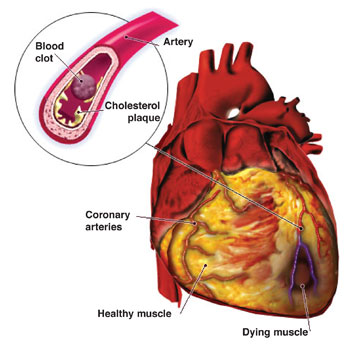
Cardiovascular disease can affect anyone. However, a person with diabetes is more susceptible to heart problems. Diabetes attacks an individual’s immune system as well as their nervous system. The blood vessels shrink and less blood flow to the heart can occur. With all the health problems that can arise, it is vital to know how to take care of the body for a long and vital life. An individual can discuss with their personal physician on what they need to do to prevent a tragedy from happening. When a person is first diagnosed with diabetes, their lifestyle must change. They will need to know how to control their issues through healthy means. Heart disease is a leading complication in a diabetic patient. It is a serious problem; however the risk can be lowered with the proper medication and lifestyle changes.

Cardiovascular DiseaseCardiovascular disease can affect anyone. However, a person with diabetes is more susceptible to heart problems. Diabetes attacks an individual’s immune system as well as their nervous system. The blood vessels shrink and less blood flow to the heart can occur. With all the health problems that can arise, it is vital to know how to take care of the body for a long and vital life. An individual can discuss with their personal physician on what they need to do to prevent a tragedy from happening. When a person is first diagnosed with diabetes, their lifestyle must change. They will need to know how to control their issues through healthy means. Heart disease is a leading complication in a diabetic patient. It is a serious problem; however the risk can be lowered with the proper medication and lifestyle changes.

Stroke takes a large number of diabetic patients each year. This is because when your blood vessels shrink, the movement is limited. An individual’s brain needs to have a certain supply of blood to keep it active. When this supply slows down, stroke complications happen. A part of the brain dies. Strokes, heart attacks and poor circulation can all be devastating to an individual as well as their families. A person that has gone through a stroke may lose their sight, hearing or motor skills.

There are preventive measures than can lower the risk of cardiovascular disease in diabetic patents. It is a lifestyle change that must be made to stay active as well as vital throughout the years.

  1. Diet and exercise. Diet is a major lifestyle change for most people. However, when a person is overweight and has diabetes, the risks are much higher. With the proper diet of low sugar foods and low fat content, an individual can become healthy. An exercise regiment should be discussed with a doctor. Too much or too little may cause an individual to experience cardiac arrest. With the correct amount of each of these steps, an individual can become healthier and reduce their risks by 40%.
  2. Blood sugar. The blood sugar for a diabetic is vital for long lasting effects. When this is too high, the human body’s system begins to break down. The physician can explain what range a person should stay in. Check this often, at least 3 or 4 times a day for maximum security. As well as taking the proper medication when directed.
  3. Cholesterol. It is important to keep a person’s cholesterol at appropriate levels. There are methods and medication that can be used to stay in the correct range. Discuss with a doctor on the best techniques to keep the cholesterol in safe amounts.
  4. Smoking. Smoking can cause various health effects in everyone. Nevertheless, it is extremely important to stop when a person has been diagnosed with diabetes. This habit can cause blood vessels to shrink, circulation to slow down even further and create new health risks as well. Patents that continue to smoke have double the chance to have a heart attack and a stroke.
  5. Blood pressure. An individual with high blood pressure is more likely to develop cardiovascular disease. A person that experiences high pressured lifestyle through home or office problems may have a heart attack or stroke. It is vital to stay clam and find relaxation techniques. There are at home kits that can assist in checking blood pressure often. A doctor may prescribe a medication that can help with this issue as well.

With simple and easy to follow steps, an individual can reduce their risks dramatically. It is vital to take the proper medication, lose weight and accomplish the exercise regiment fully. Cardiovascular disease can be controlled with a lifestyle change.

Secret Link