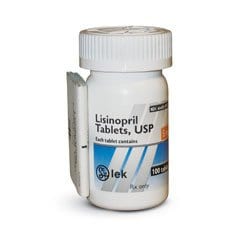
Lisinopril

Lisinopril is a prescription medication commonly used to treat high blood pressure and a variety of heart problems. As such, it should never be used except on the recommendation of your physician; and, if this medication is prescribed for you, it is essential for you to use it only as directed so that it will work most effectively and be less likely to result in side-effects or other complications.

LisinoprilLisinopril is a prescription medication commonly used to treat high blood pressure and a variety of heart problems. As such, it should never be used except on the recommendation of your physician; and, if this medication is prescribed for you, it is essential for you to use it only as directed so that it will work most effectively and be less likely to result in side-effects or other complications.

Lisinopril is an ACE-inhibitor. The way in which this medication works is that it blocks the enzyme known as as angiotestin; in turn, this causes the blood vessels to dilate, resulting in the lowering of the blood pressure.

Although lisinopril is an excellent medication and can do wonders in treating these specific conditions which have the potential to be life-threatening, it is also a very powerful compound. If it is used strictly according to your physician’s recommendations there is a lesser chance of having problems associated with lisinopril, but it is still a good idea to be aware of exactly how serious this medication actually is.

First, there are a number of factors which would contraindicate the use of lisinopril. Your physician should have full information about your medical history, current status, and knowledge of any other medications you may be using, before he prescribes lisinopril. For example, lisinopril can cause serious damage and even be life-threatening, if it is used by someone who is pregnant. In addition, lisinopril may pose the danger of drug interactions if used with some other types of medications. This also includes some kinds of over-the-counter medications, so it is essential for your doctor to know if you are using anything.

While the side-effects of lisinopril are usually quite minor and not difficult for the average patient to deal with, there is still the possibility of more severe side-effects. It may lower the patient’s blood pressure; and it can decrease one’s blood cells. This is the reason why it is so important for your physician to keep your health consistently monitored if you are using lisinopril.

As with any type of drug, lisinopril also has the potential of causing allergic reactions in some patients. These, too, can range from very minor annoyances to serious problems which can require medical intervention.

Lisinopril is an excellent means of treating specific conditions; but as is the case with any prescription medication, using it correctly is essential for it to be both effective and safe. If your doctor has prescribed this medication for you, be sure to follow his instructions for its use, and alert him immediately if you begin to experience any uncomfortable physical symptoms upon its use. While a symptom may appear to be nothing more than mildly bothersome to you, informing your physician of it is the best way to ensure that it will not result in any serious complications; he will be able to adjust or stop your cycle of lisinopril however he deeems is in the best interest of your longterm health.
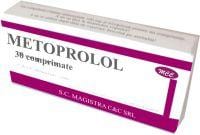
Metoprolol

Metoprolol is a beta-blocker which is often used in the treatment of heart problems and high blood pressure. It is one of the most commonly used medications of this type used for these purposes today.

MetoprololMetoprolol is a beta-blocker which is often used in the treatment of heart problems and high blood pressure. It is one of the most commonly used medications of this type used for these purposes today.

In addition to being used to treat these conditions, metoprolol is also often used as a preventative medication when the presence of certain conditions or symptoms indicate its use. For example, metoprolol can be used to lessen the likelihood of experiencing migraine headaches in a patient who has a history of migraines, or as a preventative measure against the possibility of having a heart attack when the patient’s medical history and current situation deem it likely that he could have one. In other words, metoprolol can be prescribed for the treatment of conditions and symptoms, and it can be prescribed for the purpose of warding off potential problems as well.

Another reason why metoprolol is such a widely-popular choice in medication is that most patients who experience side-effects from this drug only have side-effects which are quite mild and tolerable. While side-effects such as dizziness, diarrhea, and mild intereference with blood circulation are certainly not pleasant, they are preferable over the more serious side-effects which are much more common from the use of other types of medications. An additional factor of metoprolol is that for most people who experience these minor side-effects, they are usually very temporary in nature; few patients will have to deal with these annoyances throughout the duration.

As with any medication, however, the possibility of serious side-effects does exist. Your risk of such complications as a slowing of your heartbeat or difficulties in breathing, amongst others, can be significantly lessened as long as your physician knows that your health history and medical status make you a good candidate for this medication, and as long as you use it in the exact manner that he directs for you.

Some patients may experience allergic reactions to metoprolol. While this possibility is to be expected from beginning the use of any new medication, studies have shown that metoprolol does not pose a significant risk for most people. If you do begin to experience an allergic reaction, such as a rash or itching, you should inform your doctor about this immediately so that he can take the necessary precautions. Even though an allergic reaction may feel like little more than an annoyance to you, the fact that it is telling you that your body does not agree with the medication means you should take any allergic reaction seriously!

While there are positives and negatives connected to all medications, the health benefits of metoprolol far outweigh the minor risks. If it is used for its intended purpose, taken exactly as your physician directs you, and you also eliminate smoking so that you do not increase your risk of circulatory difficulties, metoprolol is one of the most effective and one of the safest medications currently available for treatment of these symptoms and conditions.

Diabetic Medications

If you have been diagnosed with diabetes, then you are probably on a specific set of medications designed to control your condition and ward off conditions that are closely related to diabetes.  Doctors usually take into consideration factors such as a patient’s type of diabetes, age, other current conditions, and any other medication that they may be taking, when prescribing diabetic medication.  The most common and well known of these is insulin there are several other types of diabetic medications.  Although we will not be able to cover all of these, we will discuss some of the more common diabetic medications.

Diabetic Medications: If you have been diagnosed with diabetes, then you are probably on a specific set of medications designed to control your condition and ward off conditions that are closely related to diabetes.  Doctors usually take into consideration factors such as a patient’s type of diabetes, age, other current conditions, and any other medication that they may be taking, when prescribing diabetic medication.  The most common and well known of these is insulin there are several other types of diabetic medications.  Although we will not be able to cover all of these, we will discuss some of the more common diabetic medications.

Pioglitazone hydrochloride or Actos, as it is more commonly known, is used primarily in patients with type 2 diabetes.  Actos is used to decrease a person’s insulin resistance by improving sensitivity to insulin in the muscles and adipose tissues. Despite its benefits, Actos has been known to cause and/or increase an individual’s chances of having congestive heart failure.  So, if you are on Actos, it is important that you watch out for symptoms of congestive heart failure including excessive and/or rapid weight gain, dyspnea, or edema.

Lantus is most commonly used in individuals with type 1 diabetes.  While regular insulin is a natural substance, Lantus a manmade solution of insulin glargine and is taken as an injection. Unlike regular insulin it lasts longer and begins to work more slowly.  Lantus lowers your blood sugar by replacing the insulin that your body does not produce, instead of helping your body use sugar productively like natural insulin.  Hypoglycemia is one of the most common conditions that have been directly linked to Lantus.

Rosiglitazone maleate also known as Avandia is typically used in patients with type 2 diabetes.  Avandia is used to help lower your blood sugar, by facilitating your body’s natural response to insulin.  If you are showing signs of congestive heart failure it is important that you know that Avandia is not recommended for people like you.  The clinical studies for Avandia are contradicting and some have even compared Avandia to a placebo.

Like the other medications mentioned, Metformin or Glucophage is used to lower blood sugar by restoring your body’s response to the insulin that you naturally produce.  However, unlike the medicines mentioned above, Glucophage also decreases the amount of sugar that your liver makes and that your intestines absorb.  It is important to note that the main condition to be directly linked to Glocophage is Lactic Acidosis.  Yet, this is pretty rare.  Side effects most commonly caused by Glucophage are diarrhea, vomiting, nausea, and indigestion.

Sitagliptin also known as Januvia is commonly used with other diabetic medications, such as Glucophage, when it has not proven to be as effective as the doctor had hoped.  Januvia is mainly used in patients with type 1 diabetes.  People who are taking or may start taking Januvia should be cautious if they have or are showing signs of renal failure and/or hypoglycemia.

Prandin the common name for Repaglinide typically used in individuals with type 2 diabetes.  Prandin assists the body by getting it to produce more insulin naturally.  Hypoglycemia is one of the main conditions that have been directly linked with Prandin.  However, it is important that women who are pregnant, nursing, or plan to get pregnant speak with there doctors first and take Prandin with caution.

There are many other diabetic medications.  Yet, not only do these medications come with their own warnings, they may also have an effect on other medications that you may be taking.  However, diabetes is a serious condition; so do not start or stop any type of diabetic medication without speaking with your doctor first.

Cincotta’s Season: Getting a Drug to Market

Many of us are willing to spend some time working on a project that will have an expected outcome. We can spend a weekend working on the lawn because we know it will have a conclusion and we can enjoy the benefits while engaging in something new.

Many of us are willing to spend some time working on a project that will have an expected outcome. We can spend a weekend working on the lawn because we know it will have a conclusion and we can enjoy the benefits while engaging in something new.

Athletes train to compete in a sport knowing that there is a ‘season’. There is a fixed start and stop date.

Teachers plan for a school year knowing they have certain objectives to meet in order to pass along specific skills to their students. This too will come to an end.

What if a season was 28 years long? Would athletes willingly sign up? Would they be able to endure? Would teachers enjoy having the same group of students for 28 years? Would the students enjoy the same class for so long?

Anthony Cincotta had to learn if he was made of the right stuff in living through his 28-year season.

According to Boston.com Cincotta was a graduate student 28-years ago, “Working on Syrian hamsters. Intrigued by how the animals slip from their lean summer condition into a fat, nearly prediabetic state before their winter hibernation, he had found a way to tinker with their brain chemistry and effectively reset their metabolism. Cincotta was certain that he had discovered something big, and he wondered: Could he do the same thing in people?”

Cincotta’s brother Manny was his inspiration for a very personal project. Manny died from Leukemia. Cincotta’s project involved creating a drug to help treat diabetes. After 20 years of work the Food and Drug Administration (FDA) declined to approve the drug for use in America.

Twenty years. More time than Cincotta had been in school. This was roughly half of his life dedicated to a season of developing a drug that was denied by the FDA.

After a series of mergers, acquisitions and buy-backs Cincotta once again owns the rights to a drug known as Cycloset. This time he has FDA approval.

The Boston.com report indicates, “Dr. Martin Abrahamson, medical director at the Joslin Diabetes Center, said the drug is not as effective at lowering glucose as other diabetes drugs on the market. He also said that a barrier to the widespread use of the drug might be one of its side effects, nausea, and noted that in a clinical trial of the drug, nearly half of the Cycloset-treated patients stopped taking the medication early.”

While this may sound negative Cincotta is used to delays, setbacks and negative feedback. However, he also has some positive backing as doctor’s that participated in the clinical trial express enthusiasm for the drug because unlike other diabetes related drugs it does not increase the risk of heart disease.

Because of Cincotta’s work with the brain chemistry of hamsters some doctors are intrigued by the neurologic component to Cycloset and its potential in treating diabetes.

Cincotta’s season was a long one. Now he waits to see if his work will be embraced in the treatment of diabetes.

Interestingly the wait endured by Cincotta and the continued pursuit of excellence that marked his journey really isn’t remarkably different than the struggle many diabetics face everyday. Their season isn’t short-term and the results are important. Like Cincotta they stick to their plan and continue working toward a desired result (improved blood glucose and a better quality of life).

Here’s to patient endurance for all.

A Set Aside Diabetes Medication May Make a Huge Comeback

In the history of medical science there have been numerous medications that were designed for one purpose, yet found success treating something entirely different. This is true of the drug Viagra and it may be true of Fenofibrate (brand names include Antara, Fenoglide, Lipofen, Lofibra, TriCor, Triglide).

In the history of medical science there have been numerous medications that were designed for one purpose, yet found success treating something entirely different. This is true of the drug Viagra and it may be true of Fenofibrate (brand names include Antara, Fenoglide, Lipofen, Lofibra, TriCor, Triglide).

This drug was designed to prevent heart disease. Long-term research shows that it did not work effectively to take care of this issue in a preventative way. What this ultimately means for most drugs is they would be set aside and rarely prescribed. In most cases they are pulled from the shelves and discontinued. Fenofibrate may be making a comeback, but not as preventative medicine for heart disease.

Research based in Australia, New Zealand and Finland followed 9,795 patients and discovered that the use of Fenofibrate may actually be a potent drug that seems to significantly reduce the potential of amputations among Type 2 diabetics. This study was conducted over a five-year period.

Current statistics indicate about 10% of Type 2 diabetics will lose at least a part of a lower limb to amputation. Fenofibrate could reduce the instance of the need for invasive surgery and long-term rehabilitation.

The truth is this information was buried in a 2005 study that was designed to prove or disprove Fenofibrates ability to serve as a heart drug. When the results showed it did not, the study was set aside. A new look at this study revealed findings that had been overlooked because it was not the original intent of the study.

Some amputation risk groups saw as much as a 50% decline in amputations when compared to others who were not taking Fenofibrates. The Lancet journal interpreted these findings; “Treatment with fenofibrate was associated with a lower risk of amputations, particularly minor amputations without known large-vessel disease, probably through non-lipid mechanisms. These findings could lead to a change in standard treatment for the prevention of diabetes-related lower-limb amputations.” Patients at risk for a first time amputation saw a 36% decrease when using Fenofibrates.

The Lancet also reported, “Fenofibrate has previously been shown to reduce macrovascular and microvascular complications of type 2 diabetes.”

This report suggests that a drug that has already proven helpful to Type 2 diabetics may actually provide greater support and amputation prevention than originally thought.

Medical science has moved toward statin-based drugs to help patients prevent heart disease. Fenofibrates could realistically be used to provide new support it had not previously been given credit for when used in conjunctions with statins.

As medical science moves forward in learning how drugs interact with our bodies and work to provide support for greater health the onus will still remain on the topic of education. In many cases diabetes can be avoided, prevented or delayed by participating in a lifestyle alteration that includes understanding how food interacts with your body and why physical activity is important in the process of effective glucose control.

In many cases a less active lifestyle is the norm in the 21st century. It can take concentration and dedication to buck the normal trend of a sedentary lifestyle in order to embrace one that includes more activity and a healthier variety of food. The end result is almost always positive and can often be managed without drugs.

However, when a diabetes diagnosis is given you will need to consider the possibility of a medical regimen to help you reach goals in managed care. The effects will be even greater when you become an active partner in your own care.

The Metformin Connection: Dead Fish

If you thought your diabetic medication smelled like dead fish – you’re not alone. New research seeks to determine if the smell of the medication may actually contribute to a common side effect – nausea.

If you thought your diabetic medication smelled like dead fish – you’re not alone. New research seeks to determine if the smell of the medication may actually contribute to a common side effect – nausea.

The medication is known as Metformin, which WebMD describes as, “an oral drug commonly used to treat type 2 diabetes. [It] generally has few serious side effects, but gastrointestinal upset and nausea are common. Although these effects have been well documented in studies, researchers say one unique characteristic of the pills may have been overlooked as a potential cause of the nausea: their strong fishy odor.”

The generic equivalent of this drug is known as Glucophage. WebMD describes this diabetic drug. “Metformin is used with a proper diet and exercise program to control high blood sugar in people with type 2 diabetes (non-insulin-dependent diabetes). Controlling high blood sugar helps prevent kidney damage, blindness, nerve problems, loss of limbs, and sexual function problems. Proper control of diabetes may also lessen your risk of a heart attack or stroke. Metformin belongs to the class of drugs known as biguanides. It works by helping to restore your body’s proper response to the insulin you naturally produce, and by decreasing the amount of sugar that your liver makes and that your stomach/intestines absorb.”

So while this drug serves a great purpose in the control of diabetes it can be disheartening when the medication cannot be taken because of issues related to its odor.

No official documentation exists as to the number of diabetics who have stopped or refused to use Metformin because of its distinctive smell, however there is plenty of online evidence that individuals are staying away from the drug for this very reason.

In a recent report, published in the Annals of Internal Medicine, researchers describe, “two cases in which patients discontinued use of generic metformin because of what they described as the nauseating smell of the drug,” according to WebMD.

The odor of this drug has even been liked to, “old locker room sweat socks”. While it is not conducive to positive image the odor is only linked to the immediate release version of the prescribed drug.

If you have an issue with the smell of your metformin or glucophage you should inquire about the availability of “film-coated, extended-release formulation of metformin as an alternative.”

Doctors will benefit from your honesty about the drug. If you are nauseated because of the smell this information will have a different meaning for them than if you experience stomach upset as a side effect of prescribed use. By knowing the exact reason for your discomfort your physician may be able to provide a solution.

“First synthesized and found to reduce blood sugar in the 1920s, metformin was forgotten for the next two decades as research shifted to insulin and other anti-diabetic drugs. Interest in metformin was rekindled in the late 1940s after several reports that it could reduce blood sugar levels in people, and in 1957, French physician Jean Sterne published the first clinical trial of metformin as a treatment for diabetes. It was introduced to the United Kingdom in 1958, Canada in 1972, and the United States in 1995. Metformin is now believed to be the most widely prescribed anti-diabetic drug in the world; in the United States alone, more than 40 million prescriptions were filled in 2008 for its generic formulations.” (Source: Wikipedia)

Avandia Under Fire

What if you knew that by adding a diabetic drug to your daily medical regimen you increased your risk of heart failure by more than 50%? Would you take the drug? One California County is taking a drug company to court to seek the removal of the drug from circulation.

What if you knew that by adding a diabetic drug to your daily medical regimen you increased your risk of heart failure by more than 50%? Would you take the drug? One California County is taking a drug company to court to seek the removal of the drug from circulation.

According to VOAnews, “The [Santa Clara County] lawsuit was spurred by a report on the drug released by the U.S. Senate … That report accused the drug company of withholding information about side effects of serious heart problems, including death.  At issue now is whether Avandia should be taken off the market.”

The VOAnews report stated that, “In 2007, Dr. Steven Nissen published a study showing that those taking Avandia had a 43 percent higher risk of having a heart attack and a 64 percent greater chance of dying from a heart attack than those not taking the drug. ‘We’ve been warning about this for two and a half years,’ he said. ‘There really isn’t a good reason for physicians to continue to prescribe the drug. It’s time to get it off the market.’”

Dr. Yasser Ousman at Washington Hospital Center disagrees. Ousman is quoted by VOA as saying, “There are a number of drugs that have been tested in these individuals and Avandia is one of them, and actually, it is quite effective in improving the blood sugar, in normalizing the blood sugar or delaying the occurrence of diabetes in these individuals.”

Ousman further suggests, “If you look at the large studies, that were published over the last several years, including a large number of patients comparing Avandia to a placebo or other drugs, there was actually no increase in that risk.  That risk was based on smaller studies.”

Basing his findings on more than 40 clinical trials, Nissen said, “What bothers me the most is that every month that goes by, more people are harmed by a drug that people simply don’t need.”

The Food and Drug Administration have planned further review of the drug in July, but has cautioned against the discontinued use of Avandia without the advise of your primary health care provider.

The case against GlaxoSmithCline in California has to do with what is claimed as false advertising. There is the suggestion that the drug manufacturer knew the drug could cause heart issues long before they ever issued any warnings that this could be a side effect of using the medication. A Senate report even suggests that the FDA may bear some responsibility in the lack of information passed on to patients.

The VOAnews article further indicates, “A study on Avandia funded by GlaxoSmithKline published last year, found no increase in heart attacks. But it found a significant increase in the risk of heart failure where the heart cannot pump enough blood to the organs or muscles. A number of cases resulted in hospitalization or death.”

Law.com states that Santa Clara County in California “Wants the company to pay back money from all sales of Avandia in California since 1999, as well as pay restitution for medical treatment provided to Avandia users who suffered heart problems.” The county has spent around $2 million on the purchase of Avandia as part of it’s own health program over the years. The lawsuit may have been precipitated by the fact that Santa Clara County has a public hospital and the County is seeking to make decisions in the best interest of their municipal health care facility as well as the patients who use their hospital.

Secret Link