Diabetes Support Groups

Your diabetes health care team composed of your primary physician, specialist, nurse, dietician and a counsellor is the team that you should maintain contact with. They will guide you on your medication, changes in your treatment program and your progress, but they rely on you to monitor your blood sugar levels and to ensure that your insulin shots are administered on schedule.

Diabetes Support GroupsDiabetes Support Groups: Your diabetes health care team composed of your primary physician, specialist, nurse, dietician and a counsellor is the team that you should maintain contact with. They will guide you on your medication, changes in your treatment program and your progress, but they rely on you to monitor your blood sugar levels and to ensure that your insulin shots are administered on schedule.

A supportive health care team is a blessing especially for diabetics who view their illness as a stressful never-ending experience; sometimes, however, one needs to reach out to others outside the clinical setting who are suffering from the same illness.  This is where support groups outside of your principal health care team can provide additional support and guidance. A diabetic who is in the company of other diabetics feels more comfortable about sharing personal experiences; likewise, there are valuable lessons to be gained by listening to others speak of their experiences.

Support groups provide more than support: they create positive reinforcement and diminish the seriousness of diabetes especially when they talk about how diabetes has not affected their quality of life.  They tell others that there is hope. The psychological benefits a diabetic derives from support groups are immeasurable.

Diabetes Support Groups: Where to Look
It is reassuring to know that diabetes is one of those illnesses that has a substantial number of support groups.  Almost every state in the United States has an organization or two that can give out the names and numbers of diabetes support groups.

Here is a list (in no way a comprehensive list):

  • Defeat Diabetes Foundation Inc – defeatdiabetes.org.  Click on “self-management” under Action Resources and you get a listing of all 52 states. Clicking on one state yields the names and numbers of support groups. Let’s take the example of New York. It has over 50 support groups spread out in major cities. The same is true for other large states like Florida and California. You will have no problems looking for one near your home.
  • Children with diabetes – childrenwithdiabetes.com/support/. If you have a child with diabetes and you want to connect with parents who have diabetic children, this is a web site that lists all support groups in 29 states of the United States, Canada, Colombia and South Africa. The link takes you to a page where the groups for the US are arranged by state (only 29 states are available); the ones for Canada are arranged by province. For instance, if you click on “MA” (Massachusetts), you can obtain the names and numbers of support groups for children with diabetes. In Massachusetts alone, there are six support groups for children and parents. There are three in Texas.
  • Type II diabetes. This web site is specifically for type II patients and lists professional non-profit groups that provide more information and education about diabetes: http://www.diabetes.com/diabetes_info.html. These organizations are in Florida, Virginia, Illinois, Texas, Maryland and Georgia.  They are not support groups per se but are medical organizations that have the latest information on type II diabetes, some of them staffed by doctors and specialists like endocrinologists and cardiologists.
  • Insulin Pumpers – this is a more specific group of patients. Children and adults who are insulin pumpers will find support and information at:  http://www.insulin-pumpers.org/. There are over 5,200 insulin pumpers discussion groups that you can join. They can be found in the US, UK, Scandinavian countries, New Zealand, Australia and Germany. You can also subscribe to the mailing list.

Is Diabetes Genetic

Many people who suffer from diabetes understandably worry that their children will therefore have it, although the reality is not quite as simple as that. Diabetes itself is not hereditary; although the risk factors that a person has are passed down through the genes, therefore making it more likely that the next generation will have it. An estimated 80% of those diagnosed with diabetes each year have at least one family member who already has diabetes.

Is Diabetes Genetic? Many people who suffer from diabetes understandably worry that their children will therefore have it, although the reality is not quite as simple as that. Diabetes itself is not hereditary; although the risk factors that a person has are passed down through the genes, therefore making it more likely that the next generation will have it. An estimated 80% of those diagnosed with diabetes each year have at least one family member who already has diabetes.

A family history of diabetes is only one of the risk factors; other risk factors include having a blood sugar level of more than 200 soon after eating, having high triglycerides, smoking and low HDL (good) cholesterol. In general, in the United States, one in every three people will at some point in their lives suffer from diabetes, with women being more susceptible than men. And it’s estimated that by 2025, around 300 million people worldwide will suffer from diabetes.

It can be difficult to determine if you are going to get type 2 diabetes due to a family history of diabetes, as most people don’t develop any symptoms until middle age. Less than 1% of the population develops juvenile diabetes, while it is far more likely to affect people who are over 40 years old and who are also overweight or smoke, although in recent years it has begun to affect younger people more.

The chances of being diagnosed with either type 1 or type 2 diabetes are also different, depending on various risk factors. Type 1 diabetes is most common in younger people and around 90% of children diagnosed with type 1 diabetes have no family member or relative with the disease. To some extent, it is possible to determine at birth whether a baby has some of the genes associated with risk factors.

The chances of getting type 2 diabetes depends more on environmental factors – if you have a family history of diabetes, it will increase your chances of getting it, but only if you lead an unhealthy lifestyle with a poor diet and little or no exercise. And there is also some evidence that children are more likely to develop type 2 diabetes if the mother is diabetic, rather than the father. If both parents are diabetic, the chances of a child developing it are even higher.

One thing that we have no control over is the aging process and unfortunately, as we get older we have an increased chance of getting diabetes. People aged 45 or over face an increased risk; and people over 65 in particular – around 20% of Americans over 65 have some form of diabetes. Race is also a risk factor – statistically, African Americans and American Indians are more likely to develop diabetes. As we age, it becomes even more important to minimize the risk factors that we do have control over, such as diet and exercise.

A Diabetic Did You Know

When it comes to virtually any topic there will be those who will not be satisfied until they have hard evidence to support what they have been reading or what they have heard. For this article we are gleaning details from the Centers for Disease Control (CDC) and the American Diabetic Association (ADA).

A Diabetic Did You Know: When it comes to virtually any topic there will be those who will not be satisfied until they have hard evidence to support what they have been reading or what they have heard. For this article we are gleaning details from the Centers for Disease Control (CDC) and the American Diabetic Association (ADA).

Did you know…

  • The average hospital stay for issue related to diabetes is 4.7 days and over half a million diabetics will require hospitalization annually.
  • One in ten Americans has diabetes – some have yet to be diagnosed.
  • 18,250 diabetics go blind every year.
  • 14,600 young people 16 and younger are diagnosed with Type 1 diabetes every year. 3,650 more will be diagnosed with Type 2 diabetes.
  • 73,000 people die from diabetes every year. Approximately the same number will undergo a lower-limb amputation due to complications from diabetes.
  • 1,460,000 individuals will be diagnosed with this disease each year.
  • More than 47,000 diabetics will develop kidney failure.
  • The annual economic cost of diabetes in 2007 was estimated to be $174 billion.
  • $6,649 of annual health care costs for diabetics is directly attributed to the disease.
  • 445,000 cases of unemployment disability in 2007 were attributed to diabetes.
  • Lost productivity due to premature death is $26.9 billion among those who had been diagnosed with diabetes.

There is good news. When armed with information some individuals have been able to manage existing diabetes or, if caught early enough, avoided through a positive change in lifestyle.

The good news is there are new breakthroughs being announced regularly that help diabetics live life better while successful managing the disease and slowing the effects of diabetes.

One of the key issues that can be addressed by every American is diet and exercise. Several national organizations work to encourage personal mobility in the form of walking, bike riding and cardiovascular exercise. Diet plans suggest ways to minimize potential risk to your heart and aid in managing risk when it comes to diabetes.

Science has developed multiple pharmaceuticals that can assist in the daily care of this disease while minimizing symptoms, and allowing normal daily activity.

Support groups are a lifeline for many who need the additional encouragement to find personal success in both willpower and in proactive steps to take control of the advance of diabetes.

The good thing about statistics is they are just numbers. Yes they represent real people in real circumstances, but they don’t have to represent you. The power to mange the care of your disease lies in multiple daily choices that might allow you to say…

Did you know…

  • I lowered my cholesterol.
  • I have been effective at managing blood sugar through diet and exercise.
  • I have found support and I have supported others in refusing to let diabetes control my life.
  • I pay attention to what my health care provider says and I see improvements in my life.
  • There are too many others in my life to live in depression.

If you’ve recently been diagnosed with diabetes some of the statistics seem overwhelming, but many diabetics live long and productive lives, but they did so with a brave mix of positive thinking, proper medical care and personal change.

That’s one statistic we can all live with.

Diabetes Among African-Americans and American Indians

According to the National Diabetes Education Association, “3.7 million; 14.7 percent of all non-Hispanic blacks ages twenty and older have diagnosed and undiagnosed diabetes.”

Diabetes Among African-Americans and American Indians: According to the National Diabetes Education Association, “3.7 million; 14.7 percent of all non-Hispanic blacks ages twenty and older have diagnosed and undiagnosed diabetes.”

This is roughly five percent higher than the national average. Another startling statistic comes from the Office of Minority Health, part of the U.S. Department of Health and Human Services, “African Americans are almost twice as likely to be diagnosed with diabetes as non-Hispanic whites.”

The NDEA indicates, “About 16.5 percent of American Indians and Alaska Natives ages 20 years and older who are served by the Indian Health Service have diagnosed diabetes.” They further report, “Diabetes rates vary — among Alaska Natives (6.0 %) to American Indians in southern Arizona (29.3 %).”

Among these two ethnic groups we find a larger number of diabetic diagnoses, but we also find that increasing awareness has created an environment suitable to change in attitudes and response.

It should be noted that only 5% of diabetic cases in this ethnic group were listed as Type 1.

Because diabetes is described as a “Self-managed” disease there is an empowerment in the care you self-administer. Yes, the overall cost of managing diabetes may result in $4,000-$6,000 in treatment annually, but you need to remember you are in control of the daily care you receive.

As with all diabetic cases you will need to confer regularly with a health care provider and follow dosing instructions.

Some compelling reasons to accept the empowerment of diabetes management is that in the case of all ethnicities poor diabetes care can have a profound impact on the increase incidence of stroke and heart attacks. Cardiovascular disease can be a byproduct of poor health management.

The American Diabetes Association makes clear that many American Indians are beginning to take note of the care they need. The ADA provides a prayer written by American Indian George Perez of New Mexico, “Great Spirit, We thank you for your blessings that have provided the healthy foods to nourish our bodies. May we learn to appreciate and not take for granted all that we know to make us healthier. May we be open to accept change that will benefit not only ourselves, but also our children as well.”

This prayer provides a beautiful example of how actions taken today can affect future generations. If you take seriously the care needed to keep you healthy then you may see your children choose a healthy lifestyle early on. That course of action may well result in a better lifetime of health for your children.

Most organizations agree that the primary culprit for onset diabetes is a lack of physical activity and diet. When these issues are addressed there is a marked improvement in long-term health among both African-Americans as well as American Indians.

In both ethic groups the National Diabetes Education Association provides the same targets for normal health, “A1C (Blood Glucose) Less than 7 percent (check at least twice a year). Blood Pressure Less than 130/80 mmHg (check every doctor’s visit). Cholesterol (LDL) Less than 100 mg/dl”

When these targets get out of control the likelihood of onset diabetes or Type 2 becomes more pronounced.

However, when 30 minutes of daily exercise was combined with food choices low in calories and fat, health care providers typically see an improved climate for optimum health.

The Best Way to Avoid Diabetes

What if I told you it was possible to delay or even prevent diabetes? What if I offered a solution that has proven itself over and over again? Would you take my advice?

The Best Way to Avoid Diabetes: What if I told you it was possible to delay or even prevent diabetes? What if I offered a solution that has proven itself over and over again? Would you take my advice?

Americans have a love affair with food. We delight in every crispy fry and whip cream topped desert. We snack on decadent chocolate and love those bacon double cheeseburgers with an extra large soda.

Of course we can justify the indulgence. We work hard. We must manage enormous stress. Food is our coping mechanism of choice.

The problem is that proportionally Americans are getting larger and we’re exporting the fast paced, stress filled and often sedentary lifestyle around the globe. The world is getting bigger and with that growth comes the potential for onset diabetes.

We don’t want it, we certainly don’t want to talk about it and we’ll avoid finding out for sure. If we just push through one more day perhaps the disease will go away thinking we just aren’t interested.

The truth is diabetes will set up house without your permission. It can be hereditary, but it’s often the result of accumulated lifestyle choices.

If your idea of a diet is simply to consume whatever pleases you most you may eventually struggle with the reality of diabetes. If your idea of exercise is a trip from the easy chair to the kitchen or to find the remote you may be setting yourself up for issues related to diabetes.

If you’ll think back to the beginning of this article I mentioned the possibility of delaying or even preventing diabetes if caught early enough. Would you like to know the secret?

If you can adjust your eating habits and exercise routine in order to lose 5%-7% of your total body weight you can slow down the diabetic freight train. Obviously this advice is for those who are overweight or even obese, but it is also a cautionary tale to all who believe a diet based on personal tastes alone is acceptable.

Five percent of your body weight could be less than ten pounds. What that means is a little motivation toward improved personal health care today could result in improved personal health long term.

If this is indeed a case of a runaway train then doesn’t it make sense to try to stop it before it crashes?

I know the choices at a fast food restaurant are enticing, and it’s so convenient to order from a numerical menu and drive away clamping your jaws around a #2 with a fist full of fries, but there might be a similarly convenient way to manage meals on the go with a menu that may be more nutritionally sound.

In most grocery stores or supermarkets you will find a deli with pre-packaged meals. In most cases these meals cost less than take out and may be better nutritionally than fast food. They will probably even taste better.

Take advantage of the salad bars and the pre cut fruit cups. The point is there are ways to make better food choices that facilitate meaningful life changes.

Park a bit further away from the store and walk a bit more. Take your pet for a walk. Take your spouse for a walk. Ride your bike. Visit a community aerobics class. Swim.

Find ways to include activity in your daily routine. It doesn’t have to be an all-day ordeal. A few minutes of activity is worth more than you may realize.

The combination of better food choices and a more active lifestyle will reduce stress, increase energy, reduce weight, and will remain the best alternative to diabetes prevention or delay.

Diabetes A History Lesson

Diabetes A History Lesson: Diabetes – a Greek word meaning ‘to siphon’. Not a very pleasant picture is it?

For more than 3,000 years there has been an acknowledgement of the disease known as diabetes. Physicians, in their limited understanding of the disease, offered hope in the form of such remedies as oil of roses, raw quinces, gelly of viper’s flesh, and fresh flowers of blind nettles – although at the time most physicians also realized that even with their best care the patient would likely die within a year.

Aretaeus who is credited with naming the malady referred to the disease as a liquefying process of the body. It may have seemed that way due to the more frequent urge most diabetics have to urinate and the intense thirst many diabetics face without proper care.

Between the 17th and early 20th century physicians diagnosed the disease by tasting the patient’s urine. A sweet taste generally elicited a prognosis of diabetes.

Prior to 1923 there was very little a diabetic could do, but wait certain death. Doctors tried to find a cure or at the very least something to slow the process, but the patient would invariably enter a diabetic coma and would pass away within a few hours to a few days.

Leonard Thompson was the brave boy who first received insulin. This inaugural use of insulin was accomplished when experiments on a diabetic dog conducted by Canadians Frederick Banting and Charles Best led to a breakthrough 3,000 years in the making. This duo discovered pancreatic fluid was useful in keeping the pet alive. That led to the discovery that insulin may be the needed element for diabetics. This breakthrough was proclaimed miraculous.

The ‘siphon’ of diabetes was slowed substantially over the next few decades as physicians learned there were actually two types of diabetes requiring different treatments. More effective insulin types were produced.

Insulin was administered by injection, but the glass syringes and large needles had to be boiled for daily sterilization and were used repeatedly until 1961 when single use syringes were finally made available.

Glucose meters arrived in 1969. These bulky first-run machines were replaced by smaller and smaller devices over the years.

By 1979 insulin pumps were available for diabetic sufferers. The pump served to imitate the body’s normal distribution of insulin. This was also the year the A1c test was developed as well as a bulky device that allowed for insulin delivery within the body without the use of a needle.

Believe it or not it wasn’t until the early 1990s that medical professionals finally began advising their patients that effective control of blood glucose was important to the overall success of managed care as well as enabling the patient to live a longer life.

Science continues to fine-tune treatment options by investigating ways for the body to use insulin more efficiently and stimulating the body to aid in the effort of eliminating excess blood glucose. The end result is more treatment options for diabetics and a greater freedom to enjoy a life that would likely not have been possible 100 years ago.

The onset of diabetes can be emotionally challenging, but the scientific advancements in just the last twenty years has provided substantial freedom to diabetics and has allowed an incredible life extension to many who might otherwise have had no hope.

Much is made of diabetes and rightfully so. Much is now known about the disease, how it affects the body and ways to minimize its advance. Information is now available to help many avoid the struggles associated with diabetes.

Perhaps one day diabetes itself will be – history.

Tattoo Contemplation For The Diabetic

At the age of 17 Dustin Rykert was diagnoses with Type 1 diabetes. This wasn’t a good day for Dustin. He was a star football player with his eyes on a future NFL contract.

Tattoo Contemplation For The Diabetic: At the age of 17 Dustin Rykert was diagnoses with Type 1 diabetes. This wasn’t a good day for Dustin. He was a star football player with his eyes on a future NFL contract.

In 2002 when he was suited up for college play at Brigham Young University (BYU) he was beginning to get used to a lifestyle that other players never had to think about.

At the time Rykert told BYU Net News, “”I have to make sure the blood sugars are high enough during practice so I don’t pass out but low enough that I don’t become so thirsty all the time.”

These adjustments followed Rykert to the NFL where he briefly played for the Oakland Raiders. His tenure in the NFL was short lived, but it was reported that during this time Rykert received a diabetic tattoo.

The idea of a tattoo may hold only a marginal appeal to diabetics due to potential complications stemming from the procedure. The potential for infection can be problematic for diabetics, but in Rykert’s case the role of a tattoo just made sense when he was on the football field.

Reports indicate Rykert received a diabetic tattoo on his chest. The claim was that a diabetic bracelet did not withstand the rigors of playing football so the tattoo was considered a viable alternative.

There are genuine concerns for those who desire a tattoo and also live with diabetes. However, according to an ABCNews.com report there is a growing trend by younger diabetics to leave the bracelets and necklaces behind in favor or a diabetic tattoo.

The best course of action is to visit with your primary care physician first about issues that may be of concern, but according to Dr. Michael Zbiegien in that same ABCNews.com report there are a few issues to take into account when a diabetic tattoo is considered.

  • Make sure blood sugars are in good control before getting a tattoo.
  • Do not get body art if you have a hemoglobin A1c above 8 percent.
  • Make sure you go to reputable a tattoo artist.
  • Do not get a tattoo in an area with poor circulation such as your feet.
  • Try to avoid tattooing common injection sites.

While there may be circumstances where a diabetic tattoo may seem to make sense to the patient many doctors will insist that the Medic Alert jewelry is still the best lifeline in the case of a medical emergency. EMT’s are trained to inspect the patient for Medic Alert jewelry. They may not perform a visual inspection to look for a tattoo.

One concern medical practitioners may have in relation to the act of tattooing is that dirty needles could cause the individual to contract hepatitis. Proponents of diabetic tattooing would argue that the same risk would apply to any individual seeking a tattoo.

Perhaps the most important factor when contemplating a tattoo as a diabetic is whether you have been effective in the management of your blood glucose. If you do not take your disease seriously it is likely there could be complications in relation to both healing time and infections.

One diabetic in voicing her opposition to the idea said, “I lost a leg due an infection that set in following a paper cut. I don’t think I’d be interested in a tattoo.”

Some companies have developed temporary tattoos for the same purpose, but have not gained wide spread acceptance.

The Controversy Of Pre-Testing

Many primary care physicians have suggested that patients 45 years of age and older receive Type 2 diabetic screenings every three years so the disease can be treated more effectively in its earliest stages.

The Controversy Of Pre-Testing: Many primary care physicians have suggested that patients 45 years of age and older receive Type 2 diabetic screenings every three years so the disease can be treated more effectively in its earliest stages.

However, a 2008 report from Annals of Internal Medicine indicates a diabetic screening may not be needed. This report suggests detecting hypertension may be a much better indicator of the presence of diabetes. According to that report, “The U.S. Preventive Services Task Force (USPSTF) revised guidelines recommend[ing] that doctors screen for type 2 diabetes only in adults with sustained high blood pressure above 135 over 80 millimeters mercury (mm Hg).”

The scientific community may be at odds over the effective early diagnosis for diabetes. Many physicians still support regular diabetic screenings, but this newer information is based on additional studies. The report stated, “Intensive lifestyle modification in persons with pre-diabetes delays the progression to full-blown diabetes, but whether treatment alters final health outcomes could not be determined from the studies reviewed.”

What this research tends to suggest is that early treatment of diabetes or even pre-diabetes may have some positive effect it may not significantly alter the final progression of the disease. The role suggested is one of monitoring blood pressure as an indicator of the potential presence of diabetes. This would reduce the diabetic testing of many individuals and may reduce health care costs until such time as diabetes has been diagnosed using the more streamlined blood pressure testing as a pre-test for the disease.

Dr. Susan L. Norris told Reuters Health, “Aggressive lifestyle changes can dramatically reduce the incidence of diabetes, but it is not clear whether the diagnosis of pre-diabetes confers any particular health benefit over and above what one might expect if all obese patients were counseled to pursue these lifestyle changes.”

Norris seems to suggest that individuals should pursue positive lifestyle choices even without a diagnosis of pre-diabetes. If individuals committed to health goals that included a balanced diet, physical exercise and stress reduction they would already be pushing the potential of diabetes further away.

Perhaps the point of this report is that wise choices over a long period of time can result in a better health picture overall. The potential reduction in testing would likely result in significant health savings for patients and allow simple blood pressure checks to alert health care providers to the potential onset of diabetes. Admittedly blood pressure checks can be self administered at many pharmacies and are routine checks when visiting your doctor.

Included in their report the U.S. Preventive Services Task Force stated,  “Screening for type 2 diabetes provides few benefits.” As previously stated their singular exception was for those suffering with hypertension.

There is also the potential that excessive focus on the disease might result in excessive patient stress regarding its potential impact. The end result may be a low cost and low stress method of monitoring the potential without making it a proverbial dragon to be faced with fear and trembling.

The American Diabetes Association indicates 7.4% of Americans have diabetes. The U.S. Preventive Services Task Force seems to be indicating it may not be necessary to subject the other 92.6% to regular tests.

While some may argue the validity of testing this does provide room for discussion with your doctor when you have questions about the potential for diabetes.

What Is Gestational Diabetes?

Many have heard the term “Gestational Diabetes”, but have never really been sure what it was. The word gestational has to do with pregnancy while the word diabetes in this case refers to insulin levels that are not sufficient to manage blood glucose. Unlike Type 1 or Type 2 diabetes this type generally goes away following delivery.

What Is Gestational DiabetesWhat Is Gestational Diabetes: Many have heard the term “Gestational Diabetes”, but have never really been sure what it was. The word gestational has to do with pregnancy while the word diabetes in this case refers to insulin levels that are not sufficient to manage blood glucose. Unlike Type 1 or Type 2 diabetes this type generally goes away following delivery.

The development of this condition during pregnancy appears to be influenced significantly by hormone release typical in pregnancy. Women who develop gestational diabetes will typically do so in the final trimester of pregnancy.

The American Diabetics Association (ADA) indicates there are about, “135,000 cases of gestational diabetes in the United States each year.”

Normally glucose is used by the body to create energy, but in the case of gestational diabetes insulin does not provide the support the body needs for the conversion process. This deficit results in a condition called hypoglycemia. What this essentially means is your body has more glucose than it needs and struggles to either use or eliminate it without the aid of sufficient insulin.

It is important to know that diabetes during pregnancy requires managed care just like Type 1 or Type 2 diabetes. Without proper care and attention the mother could unintentionally be placing their unborn child at risk.

Two Scenarios

Tanya is six months pregnant. Her doctor just informed her that she has gestational diabetes. A managed care plan was offered and Tanya took advantage of the proactive steps needed to protect herself and her child. With proper care Tanya delivered a beautiful and healthy baby and is on the road to personal recovery.

Kelly heard that gestational diabetes takes care of itself following pregnancy so she didn’t think it was important to modify her personal care plan. After all, she only had three months left before the baby was due. How much harm could happen in three months?

What’s Going on Inside?

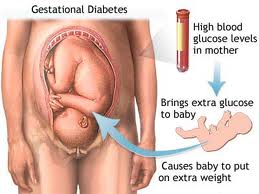
Your baby is connected to you via the umbilical cord. When you have high blood glucose so does your baby. When your body is working overtime to manufacture insulin so is your baby’s. When your child can’t produce enough insulin to take care of the flood of blood glucose it will store that glucose as fat. The end result is a chubby baby that may have long-term trouble getting rid of their baby fat and may experience respiratory issues following delivery.

The ADA indicates, “Babies with excess insulin become children who are at risk for obesity and adults who are at risk for type 2 diabetes.”

By working with a primary care physician during pregnancy to manage your blood glucose you are offering improved health to your unborn child.

Long-term Results

By working with your health care provider to manage your blood glucose and then continuing positive lifestyle changes following pregnancy you can give your child a healthy start while minimizing the real potential of developing Type 2 diabetes later in life. This is true for both you and your child. This is why gestational diabetes should not be viewed as only a temporary problem that will go away after pregnancy. It is a condition that essentially places a billboard in your life asking for personal change.

Virtually all health care providers will suggest a three-prong approach to successful long-term management.

  1. Effective personal weight management.
  2. A plan for regular physical activity
  3. Informed choice and discipline in food selection.

Estimates indicate gestational diabetes will affect 3-8% of the population. Your physician will generally check for this condition prior to your third trimester.

Chronic Pancreatitis

Excellent physical condition is everyone’s golden dream. However, some conditions hinder the realization of this dream. Chronic pancreatitis is one such condition. Constant inflammation of the pancreas leads to irreparable corrosion of the pancreatic structure and function.

Chronic PancreatitisChronic Pancreatitis: Excellent physical condition is everyone’s golden dream. However, some conditions hinder the realization of this dream. Chronic pancreatitis is one such condition. Constant inflammation of the pancreas leads to irreparable corrosion of the pancreatic structure and function.

Characteristics of Chronic pancreatitis
To adequately comprehend the complication, it is important to examine various aspects of the condition. It is vital to understand as to what according to the experts are the symptoms of chronic pancreatitis. How this condition is diagnosed, and what are its causes and treatments?

Chronic pancreatitis is characterized by persistent and sporadic abdominal pains. This is due to poor absorption of fats in the food that you eat. Considerable weight loss may also be observed in patients. Nevertheless, patients show these symptoms differently with some appearing really sick, while others do not appear unhealthy at all. Some patients may have pains after taking high fat and protein meals.

Doctors diagnose chronic pancreatitis based on your symptoms or history of acute pancreatitis, heat-ups, or excessive alcohol use. Tests on pancreatic structure and function are done to establish any malfunction. Blood tests are less useful in diagnosing chronic pancreatitis. However, they may indicate high level of glucose in the blood. The high levels of glucose imply that your pancreas might not be in a position to produce enough insulin to regulate sugar levels in the body.

The highest percentage of chronic pancreatitis in adults is caused by alcohol abuse. Most patients have had a history of long time alcohol consumption. However, a few cases of chronic pancreatitis are inherited, while others have no known cause. The unknown causes are referred to as of idiopathic origin. Chronic steroid and anti-inflammatory use may be another cause but it is less frequent. In children, cystic fibrosis is the most common cause of chronic pancreatitis. In other parts of the world like tropical regions, acute protein and energy malnutrition is a widespread cause of chronic pancreatitis.

Management of Chronic Pancreatitis
Management of chronic pancreatitis ranges from medical measures to therapeutic endoscopies and surgery. Therapeutic endoscopy means performing a treatment inside your intestine using special instruments that go through the scope. One effective preventive treatment is that as a patient you should avoid alcohol. This applies to all chronic pancreatitis patients with no regard to underlying causes of the complication.

Avoiding alcohol makes management easy and averts worsening of the situation. Treatment is directed towards the underlying cause and focused to rest the pancreas and intestine so as to relieve painful heat- ups. This can be done with the patient receiving only intravenous fluids instead of solid oral foods.

However, all these might not adequately address severe abdominal pains. High doses of analgesics therefore become necessary to ease the pain. Chronic pancreatitis may lead to diabetes which can be treated by long term insulin therapy.

As has been established, chronic pancreatitis is a complication of the pancreas. This creates insufficient absorption of fat in your diet. The major cause of the complication is alcohol abuse. The outstanding symptom is constant abdominal pains while treatment ranges from medical measures to surgery and use of herbs. All these when put into proper use will enhance your health and avoid chronic pancreatitis. However, preventive measures remain the best way to avert the complication.

Secret Link