Depression And Diabetes: Symptoms

Depression And Diabetes - SymptomsDepression And Diabetes – Symptoms: The connection between diabetes and depression hands out scary statistics, especially for women. The statistics do not show that every person who obtains diabetes in their lifetime develops depression as well, but it is a huge possibility. Studies have proven that women who have diabetes are 29 percent more likely to develop depression than women who do not have diabetes and for those patients who use insulin to control diabetes are 53 percent more likely to develop depression.

What causes depression in diabetes to occur? Many believe the cause of depression is due to lack of diabetic management while others believe that daily stress of managing diabetes can lead to depression.

Lack of Diabetic Management– A person with diabetes has a lot of things to do during the day to take care of themselves so that diabetes does not control their life. If diabetes is not managed properly than diabetic symptoms can mask themselves as depression symptoms, making you feel very sad and unlike yourself.

Daily Stress of Diabetes Management– People who have diabetes realizes the daily stress as they are the ones who have to draw blood several times during the day and take their blood sugar. This can interfere with daily life, especially when trying to enjoy events with friends and family members. If a person has to stop the whole event just to take their blood sugar, they began to feel almost like a burden. It can cause a certain amount of stress, which in turn can cause depression.

The most important thing to do when you believe depression or diabetes can be a health issue in your life is to talk to your doctor. However, you should know both symptoms so that you can tell your doctor exactly what you  have been feeling.

Depression Symptoms

  • Sadness that lasts past two weeks and does not get better
  • Irregular feelings of guilt or hopelessness
  • Thoughts or attempts of suicide, a want to end your life
  • Muscle pains on a daily basis
  • Overeating or Under-eating

Diabetes Symptoms

  • Numbness or tingling in your legs, arms, toes or fingers
  • Pain in your hands or feet
  • Seeing black spots
  • A dizzy feeling, that makes you feel uncomfortable
  • Increased thirst

Diabetes can be hard to manage, but even harder when depression enters the picture. If you have diabetes and find yourself feeling a bit sad, talk with your doctor. They may be able to prescribe an anti-depressant that will help you feel better. When you have diabetes the best thing you can do to help stay away from depression is to manage your diabetes very well. Take your insulin, take your daily blood sugar tests, eat healthy, get in a bit of exercise and remember to talk to your doctor about any changes you are feeling.

Blood Testing Strip Recall – Abbott Diabetes

Blood Testing Strip Recall - Abbott DiabetesBlood Testing Strip Recall – Abbott Diabetes: For questions, please contact Abbott Diabetes Care at the following:

English: 800-448-5234
Español: 800-709-7010

Update: Abbott Diabetes Care Announces Recall of Certain Lots of Precision Xtra®, Precision Xceed Pro®, MediSense® Optium™, Optium™, OptiumEZ and ReliOn® Ultima Blood Glucose Test Strips in the United States and Puerto Rico

* No other Abbott Diabetes Care products are affected
* More information is available at: www.precisionoptiuminfo.com

ALAMEDA, Calif. Dec. 23, 2010 — Abbott Diabetes Care today announced that it has initiated a recall of 359 lots (approximately 359 million strips) of Precision Xtra®, Precision Xceed Pro®, MediSense® Optium™, Optium™, OptiumEZ and ReliOn® Ultima Blood Glucose Test Strips in the United States and Puerto Rico.

The test strips are used with Abbott’s Precision Xtra, Precision Xceed Pro, MediSense Optium, Optium and OptiumEZ blood glucose monitoring systems. ReliOn Ultima test strips are used with the ReliOn Ultima blood glucose monitoring system. The blood glucose monitors are not being recalled and customers can continue to use the blood glucose monitors.

The affected test strips may give falsely low blood glucose results, which can lead users to try to raise their blood glucose when it is unnecessary and to fail to treat elevated blood glucose due to a falsely low reading. The problem appears to be related to longer than expected blood fill times. This may be dependent on the age of the strips and if the strips have been stored in (or exposed to) higher temperatures (above 72°F and not to exceed 86°F) for an extended period of time.

Customers who have test strips from these affected lots should discontinue use of the product. Abbott Diabetes Care will replace affected test strips at no charge. Abbott Diabetes Care initiated this recall following a routine internal quality review that indicated certain lots of Precision Xtra, Precision Xceed Pro, MediSense Optium, Optium, OptiumEZ and ReliOn Ultima blood glucose test strips may experience longer than normal blood fill times which may cause falsely low blood glucose readings.

Customers are advised to contact their health care provider to determine testing options if they do not have any unaffected test strips to use.

However, if consumers must use affected test strips while in the process of obtaining new strips, they should:

1. Check the amount of time it takes for their blood glucose meter to start the “countdown” after they first apply blood to the test strip. They should start timing immediately after blood first makes contact with the test strip. If the meter takes longer than five seconds to start the countdown, that test strip is affected and the result should not be used. Users should check the time for each test strip they use because all of the strips in a package may not be affected to the same degree. If any reading appears lower than they would expect or does not seem to correlate with the way they are feeling, the user should contact their health care provider immediately.
2. If they do not immediately have access to unaffected strips and are unable to test their blood sugar, users need to be aware of symptoms of high blood sugar (hyperglycemia) and low blood sugar (hypoglycemia).
* Symptoms of high blood sugar include excessive thirst, excessive urination, blurred vision, weakness, nausea, vomiting, and abdominal pain. If a user is experiencing any of these symptoms or is not feeling well, they should contact their health care professional immediately.
* Symptoms of low blood sugar may include trembling, excessive sweating, weakness, hunger, confusion, and headache. Some individuals may have no symptoms at all before they develop unconsciousness or seizures. It is important to treat low blood sugars promptly to avoid loss of consciousness or a seizure. If a user is unable to obtain unaffected strips, they should contact their health care provider for advice on how to treat these symptoms before they occur.

The recommendation is that hospitals and user facilities stop using the recalled test strips and follow the steps below:

1. Use test strips from unaffected lots.
2. If the health care facility does not have any test strips from unaffected lots but has an alternative point-of-care blood glucose testing system, begin using the alternative system until new, unaffected test strips can be obtained.
3. If the health care facility does not have any test strips from unaffected lots or immediate access to an alternative point-of-care blood glucose testing system, health care providers should take the following steps:
* Verify any critical glucose test results (e.g., test results that may be used to adjust insulin therapy in vulnerable patient populations) generated on the Precision Xceed Pro Blood Glucose Monitoring System using a central laboratory blood glucose method. Clinical judgment should be applied when deciding whether to act on results prior to verification.
* Verify any Precision Xceed Pro Blood Glucose Monitoring System results that do not match a patient’s symptoms, or seem unexpected for the patient’s clinical status, using a central laboratory blood glucose method.
* Monitor the amount of time it takes for the Precision Xceed Pro Blood Glucose Meter to start the “countdown” after blood is first applied to the test strip. If the amount of time exceeds five (5) seconds, discard that test strip immediately because the blood glucose result may be erroneously low. In addition, if this occurs:

o Note the specific lot number of that test strip;
o Notify Abbott Diabetes Care to report the observed problem with that lot by calling 1-877-529-7185;
o Make sure to check fill time on each individual strip during use and do not assume if one strip in a package/lot appears to be unaffected, that all strips in that package/lot are unaffected.

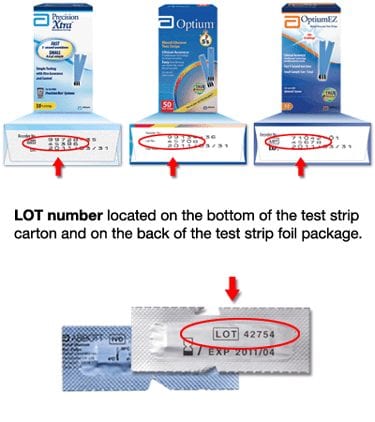
Customers can check if they have test strips from the affected lots by visiting www.precisionoptiuminfo.com and looking up their product lot number.

Precision Xtra, Precision Xceed Pro, MediSense Optium, Optium, OptiumEZ and ReliOn Ultima customers can also get information by calling Abbott Diabetes Care customer service at 1-800-448-5234 (English) and 1-800-709-7010 (Español).

The website and customer service phone numbers listed above will also provide customers with information about returning affected test strips.

Unaffected Precision Xtra, Precision Xceed Pro, MediSense Optium, Optium, OptiumEZ and ReliOn Ultima Blood Glucose Test Strip lots may be used by customers to test their blood glucose as directed by their health care providers.

Abbott Diabetes Care has reported this situation to the U.S. Food and Drug Administration and is working to make the necessary corrective actions to prevent this situation from recurring.

Medicare Advantage Plan

Medicare Advantage Plan: When you are looking into Medicare for either diabetic supplies or any other type of health issue that requires monthly prescriptions you must know some things about it. First, you should recognize that there are so many parts of Medicare plans to choose from and while Part A and Part B are covered under the Original Medicare Plan, many people are looking further into other plans such as Medicare Advantage.

Medicare Advantage is a plan that allows for private health insurance plans inside the Medicare program to be chosen instead of standard Medicare plans such as Plan A and Plan B. Members will receive their health care needs from a private plan while Medicare pays a certain amount of money monthly. It does not matter if the member actually uses health care services that month or not.

With Medicare Advantage members are supplied with lower co-payment costs as well as extra benefits. However, just like with members who are on the Original Plans A and B, members must use doctors and hospitals that are located on the plan roster.

You do not have to do anything special or pay extra or have any special concerns to be part of Medicare Advantage, you just have to sign up for that particular plan. If you are eligible for Medicare Parts A and B than you are eligible for Medicare Advantage, as long as the pre-member lives in a area that is available for Medicare Advantage.  There are certain areas that do not have Medicare Advantage although the issue is currently being worked on to supply the plan to rural areas without it.

When it comes to the Medicare Advantage program, there are different ways that the program itself works. For instance, some private insurance plans will pay a certain amount of your Medicare A and B plans would. Others will pay the whole premium. Nearly all private insurance programs will cover drug prescriptions and many other benefits that are not covered on the Medicare Plan A and B.

Even if you chose Medicare Plan A or B in the beginning of choosing Medicare as your health provider, you can still switch Medicare Advantage as soon as you want to. Medicare Advantage is more helpful than other plans but can have unnecessary benefits if you are looking for something much simpler.

Check into the Medicare Advantage plan and remember that health care is always changing therefore the best thing that you can do is to keep yourself updated about Medicare changes and the best way to do that is by looking up updates online.

Can Cell Switching Help Diabetes?

Can Cell Switching Help DiabetesCan Cell Switching Help Diabetes: Diabetes is a very tough health issue that millions of people around the world deal with every single day. Those who have diabetes know how disconcerting it is to have to stop mid-day and do a blood test. Diabetes takes a lot out of a person and when it is not treated; there are so many wrong things that can happen in the future from toe amputations to blindness.
Look for the signs when it comes to diabetes because diabetes is a disease that can sneak up on us all. Here are some strong symptoms to look for:

  • Numbness or tingling in your legs, arms, toes or fingers
  • Pain in your hands or feet
  • Seeing black spots
  • A dizzy feeling, that makes you feel uncomfortable
  • Increased thirst

Based off records from the American Diabetes Association, “23.6 million children and adults in the United States, or 7.8% of the population have diabetes. An estimated 17.9 million have been diagnosed with diabetes and more than 5.7 million people do not even realize that they have diabetes.

It is important no matter what promises or theories come into view that you make sure you continue to manage your diabetes. It is great that there are always medical advancements happening but there is no time frame to any of the new theories in medical advancements.

Due the ever-changing results in medical advancements and research there is always something changing that helps give hope to those suffering from different illnesses. Now, scientists are reporting about early success in altering one kind of particular cell into another, which many help patients heal in the future.

For example, if a person were to have a heart attack that damages the muscle tissue around the heart than some day in the future, doctors might be able to take other cells and make them become muscle tissue to help the heart pump.

This is all futuristic and nothing is promised but theory is more than just an idea. Many people believe that this is the very first step in stem-cell biology. It is pretty much fast-forwarding cell growth, which originally happens with injury healing.

Stem cell research is helping in so many areas and so many illnesses are finding new cures that one day, even cancer might have a cure.

Switching cells looks very prominent for the future and may give so many people much needed relief from everyday stress and wear/tear on their bodies due to diabetes and other illnesses.

Bayer Contour USB Glucose Meter

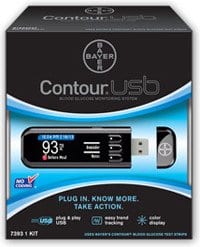
Bayer Contour USB Glucose MeterBayer Contour USB Glucose Meter: Throughout history, diabetes management has been a difficult process, mainly due to the monitors that record blood glucose results. Through time products have obtained a higher status and even made testing easier and less painful than before.  However, it was not until Bayer’s revolutionary portable blood glucose monitor showed up in the medical market that things really began to change. 

That was nearly forty years ago that Bayer’s first portable blood glucose monitor hit the medical market. With every year, due to technical advances, medical machinery gets better and better. Thanks to Bayer, the future of healthy, fast and effective diabetes management is easier than ever due to the new Contour USB Meter.

In today’s world, nearly everything can be completed on the computer. Due to the internet, much more can be done such paying your bills, doing some Christmas shopping and even in some areas do some grocery shopping. Now, with the Contour USB Meter, you can also keep your diabetes tests on your computer with simple and easy technology that comes with your monitor.

The new Contour USB Meter has a plug and play feature which makes connecting to your computer fast and easy, even for those who are not quite as computer savvy as others. Easy GlucoFacts Deluxe Software makes the install simple and fast as well.

With the new Contour USB Meter, you can keep up with your diabetes management by setting up a reminder for yourself. In today’s world, it is easy to get lost in the fast paced rush of work, school and others events that keep us all busy. With the Contour USB Meter, you’ll get a reminder to let you know when it is time to test and thanks to the 2,000 storage capacity unit, you will always have your results handy.

When you have more time available, make sure you use the insights that will help your doctor to understand how you were feeling when you took your blood sugar. You can mark your test results as “sick” or “stress”, you can add whatever you would like to describe the way you are feeling at the moment.

The new Contour USB meter is a great adaptable, small portable blood sugar monitor that is perfect for the on-the-go lifestyle.

Therapeutic Shoes: Preventing Foot Disease

Therapeutic Shoes - Preventing Foot DiseaseThere are over 24 million Americans who have been diagnosed with diabetes and more than 25 percent of them will develop some sort of foot complications that may need to be amputated. Annually, 38,000 elderly individuals loose a lower appendage due to complications that derive from diabetes. This is why it has become important for anyone who has been diagnosed with diabetes to own a pair of therapeutic shoes. Therapeutic shoes can be expensive, no doubt, but if you have Medicare, then you could save a lot of money when you buy a pair.

Medicare Part B covers therapeutic shoes as long as your doctor prescribes them. Here are some issues that doctor’s look for when it comes to assessing your feet for the need of therapeutic shoes.

  • You must have diabetes type 2
  • You must have one of the conditions listed below
  • Calluses that could lead to foot ulcers
  • Partial or complete foot amputation
  • A history of foot ulcers
  • Nerve damage caused by diabetes
  • Deformation of the foot
  • You must be diagnosed with diabetes and are being treated under a diabetes care plan that states you need therapeutic shoes or inserts.
  • Medicare also requires that a orthotist, pedorthist or prosthetist fit and provide the needed therapeutic shoes

Therapeutic Shoes and Inserts Offered by Medicare
There are certain types of shoes and inserts, which are covered by Medicare.

  • One pair of depth-inlay shoes/ three pairs of inserts
  • One pair of custom-molded shows/ inserts
  • If wearing depth-inlay shoes due a deformity of the foot, than two you will receive two additional pairs of inserts.
  • On certain occasions that call for it, Medicare will offer to cover inserts or show mortifications instead of inserts.

There are ways that individuals who have diabetes can prevent the need for later amputation and one of those ways is by wearing the proper shoes. However, there are so many others ways that one can take care of their feet and it all starts with knowing exactly how. Here are some ways to protect your feet:

  • Wear therapeutic shoes
  • Diabetic shoes are made to provide comfort, enhance protection and help deflect injury.
  • Wear socks
  • Most people do not like to wear socks. However, socks can act as a buffer to stop scratches and scrapes that could ultimately lead to something bigger.
  • Follow your exercise and diet closely.
  • Skimping here and there is not good. So keep up the hard work to achieve great rewards.
  • Select some time throughout the day to inspect your feet.
  • Look for blisters, swelling, cuts and red spots. Make sure you check really well in between your toes. If you find an ingrown toenail, you should contact your doctor to find the best solution for removal.
  • Tell your doctor if something changes.
  • Your doctor should know the ends and outs of your foot. If it changes color, or feels unlike your foot or changes shapes than your doctor needs to know.
  • You should go for a yearly check-up, just for your feet.
  • Even if your feet feel great, you should still go for a yearly check-up. It is important to make sure you are not missing anything.
  • Your feet should be washed daily, patted dry and rubbed down with a mild lotion.
  • Do not put lotion in between your toes.
  • Keep your toenails trimmed and filed to prevent issues with toenails or scratching in the middle of the night.
  • Keep your shoes on; it is important that you never walk around barefooted.
  • If you just cannot stand to wear shoes, than slide into some socks. Nevertheless, never go barefooted.

These are all important tips to keep in mind when it comes to your feet. You are their protector and you can be a huge part of keeping them safe and from a harmful future. Take care of your feet.

Medicare Covered Diabetic Supplies

Medicare Covered Diabetic SuppliesThrough Medicare, many different kinds of diabetic supplies can be acquired and the cost to your pocket is substantially less than what you would pay outright for it, had you not had Medicare. Medicare will cover the cost of diabetic supplies as long as you have diabetes, you will have to produce a blood test in order to get things rolling, but once you have Medicare you will be able to obtain your supplies as long as your doctor prescribes your need for them.

Here are some things to keep in mind when applying for Medicare help for diabetic supplies:

  • Receiving Medicare through a Medicare Advantage Plan like HMO or PPO will have you follow a different method in order to obtain your supplies but once you have received all the paperwork from your plan, you will know exactly what you need to do.
  • For other Medicare plans, your doctor is the only person who can prescribe diabetic supplies for you. Ordering without a doctor’s prescription is a waste of time.
  • Your doctor not only has to write a prescription, they must also document a need for it through medical records and give you the prescription as well.
  • Once this has been completed, the supplier must receive that prescription before Medicare is billed.

List of Supplies Covered by Medicare:

Medicare Part B helps to cover many different supplies needed for diabetic patients rather they need insulin or not. However, for those who do use insulin the amount of diabetic supplies an individual has covered varies. Some individuals who use insulin could obtain 100 test strips and lancets monthly and one lancet device every six months. Others who do not use insulin may be able to obtain 100 test strips and lancets every three months and one lancet device every six months.

Insulin and Insulin Pumps
Medicare Part B will not cover insulin if it is not used with insulin pump; however, injected insulin is covered by Medicare Part D and can be supplied through that plan. All insulin and needed supplies such as needles, syringes, and gauze and alcohol swabs will be supplied. External insulin pumps including the needed insulin can be covered through Medicare Part B, as long as it is prescribed by your doctor. Typically, Medicare will pay 80 percent of the cost of the insulin pump itself.

Therapeutic Shoes
Foot disease is a growing problem with those who suffer from diabetes, especially for elderly people. That is why therapeutic shoes are so important and since they are covered on Medicare, there is no reason why no one who is suffering from diabetes cannot own a pair to keep future foot problems away. Medicare will not only cover the therapeutic shoes, they will also cover one pair a year and three pairs of inserts for them.

You know that Medicare will cover your diabetic supplies, but you should also know just how much they would pay. The amount that Medicare will pay depends on the type of coverage you have and where you are buying your supplies at, first you must realize that there is a yearly deductible, which must first be paid before Medicare will cover the cost of diabetic supplies. Once that is paid, you will then pay 20 percent of the approved diabetic supplies. The cost is cut down a certain amount if you choose to go with a diabetic supplier. However, if you received your Medicare through a Medicare Advantage Health Plan such as HMO or PPO, than you may end up pay a very small amount of even nothing at all for your diabetic supplies.

Your supplies are affordable but you should always do a little research when it comes to Medicare, new bills are always being passed on what Medicare will or will not cover and the more you know the better off you will be as a Medicare carrier.

Discovering Medicare and Diabetes

Discovering Medicare and DiabetesIf you have diabetes than you already know the financial burden test strips, lancets, monitors and control solution can leave on you. Monthly you shell out a few hundred dollars for all your test supplies and they just do not seem to last long enough before it is time to shell out another hundred dollars or so. It can be quite a pain in the bank but that does not mean it has to be.

If you have diabetes, there is a chance that you can apply for Medicare. Medicare will not only help you afford your supplies every month, it can also help with other supplies that could be needed in the future, such as a therapeutic shoe to prevent foot disease. There are several parts to Medicare, which you must understand before applying for it. Here they are:

Medicare Part A aka Hospital Insurance is helpful when you are a patient within a hospital; it can also be helpful in times of home health care, hospice care or to cover the expenses of a nursing facility.

Medicare Part B
aka Medical Insurance is helpful in covering expenses toward doctor’s bills or outpatient care bills. It can also be helpful to make sure that illnesses do not become worse than they are.

Medicare Part C aka Medicare Advantage Plans such as HMO or PPO, this is health coverage that is setup through private companies and assesses both Part A and Part B in order to cover the costs of prescription drugs.

Medicare Part D aka Prescription Drug Coverage is helpful in covering the high costs of prescription drugs. It can lower the cost of your prescription drugs and keep those high costs at bay in the future.
You can get many different supplies from Medicare. You may already qualify for these supplies if you are on Medicare or have a blood test showing you are a diabetic.

Here is a list of supplies covered by Medicare:

Most likely, you are thinking this all seems like a pretty good idea to save some money, but you may be asking yourself, “How do I get my supplies?” The answer is simple really; you can get your supplies a couple of different ways. One of those ways is through a Medicare participating provider such as a medical supply store or a local pharmacy. Another convenient way to obtain your supplies is by setting up a monthly delivery order, to your doorstep via the internet or snail mail through a diabetic supply company.

You should keep in mind when you order your supplies that you will need to ask for refills monthly, you will need a new prescription from your doctor to obtain additional lancets, and test strips yearly.

Becoming a diabetic and living with diabetes is hard as it is but knowing that you have full coverage when it comes to doctor visits, high cost drug prescriptions, hospital visits and even long-term nursing facility care, can make things a little better. Diabetes is a lot less of a struggle when you can afford the supplies you need to take care of yourself, look into Medicare today.

Can Medicare Cover Insulin Pumps for Patients with Type 2

medicare and insulin pumpsDiabetes can be hard to live with, it does not matter which type you have. It could be type 1, type 2 or gestational diabetes; they are all very difficult to live with. Type 2 diabetes however, is the most common diabetes out there among millions of Americans who have been diagnosed with it. Type 2 diabetes appears to be more common in Latinos, Native Americans, Asian Americans, Native Hawaiians and African Americans.

A person who has type 2 diabetes is dealing with either a body that is unable to produce insulin or cells that ignore insulin. For the body to work properly, insulin is necessary. Glucose turns into energy, therefore any food that you eat will break down all the sugars and starches into glucose, which will in turn, fuel the cells in the body. Glucose can start to build up in the blood, rather than in the cells, which ultimately starts a long path of diabetes complications.

For those who have type 2 diabetes, the diagnosis used to be simple. Get plenty of exercise and watch what you eat. If you eat a lot of sugars and starches than the problem gets a lot worse. This diagnosis is fairly easy for many people and there are people who were pre-diabetic and seem to be handling life well at the moment by not showing any signs of becoming a full-blown diabetic. However, what happens when diet and exercise are not enough? What happens when a person has done all they can to help their blood sugar level out but it still skyrockets or drops suddenly, without much warning? For these individuals, it used to be a hard diagnosis to make, but now there is an easy answer and the answer is yes. Yes, a person with type 2 diabetes can be covered by Medicare when they need an insulin pump. However, just as if with any other diabetic supplies you need, you must have a prescription from your doctor.

Medicare used to only cover insulin pumps for patients who had type 1 diabetes, but since there is a growing issues with type 2 diabetes, there is a growing need for insulin pumps for patients who do not have type 1 diabetes are still battling insulin issues.

To receive a pump you must have to following:

  • Type 1 insulin-dependent Diabetes
  • Type 2 insulin-dependent Diabetes
  • Gestational Diabetes with a blood sugar that in uncontrollable.
  • Written prescription from your doctor
  • Medical records showing that you what you claim
  • Complete a diabetes education program
  • Completed a program of at least 3 daily insulin injections with frequent adjustments of insulin dosage for the past six months
  • Self-testing documentation for the past two months that shows four times a day testing

Once you are approved, for an insulin pump, you will save the most money if you go through a Medicare approved provider. When it comes to diabetic suppliers, they must meet a very long list of strict standards. It is possible to order your insulin pump from any store that sells that, however, if they supplier is not enrolled in Medicare, Medicare will not pay for the pump leaving you with the bill.

Cells That Reduce Autoimmune Attacks

Cells That Reduce Autoimmune AttacksCells That Reduce Autoimmune Attacks: Diabetes is a growing epidemic. In fact, more than 24 million Americans have diabetes and a little more than 57 million individuals are pre-diabetic, which means they are right on the border of becoming a full blown diabetic. Diabetes affects so many people’s lives that it has become the number seven killer in the United States. Annually, more children develop diabetes through hereditary genes and an obesity rate that just keeps skyrocketing. Elderly patients seem to have diabetes worse than anyone else and many end up losing their life to the disease of diabetes.

Each year comes a new generation of diabetics who are hopeful that one day, advancements in medical research will find a cure. With that being said scientists might have accomplished just that.

Through recent investigative medical studies, issued by researchers at the Dana Falber Cancer Institute and Harvard Medical School Department of Pathology, a new advancement has appeared that just might help break the ever-growing cycle of autoimmune attacks that occur within the body destining individuals with life-long illnesses such as lupus, cancer and even type 1 diabetes. A connection has been made between the function of cells and the reduction of autoimmune attacks.

With this distinction becoming clear, scientists hope to develop new advances for treating autoimmune diseases like type 1 diabetes. Here is how it all works:

In the body, there is an amount of white blood cells known as CD8+ Treg cells. These cells exist to help fight against bacteria in the body, they not only kill an infected virus they can also kill tumor cells. CD8+ Treg cells have the ability to counteract autoimmune attacks on the body, which allow cells to be increased through a chemical process, all the while, reducing antibodies that attack tissue within an individual’s body. Ultimately, CD8+ cells control autoantibody formation, which is the creation of antibodies that end up attacking the body’s own tissues.

This is all possible due to the bodies “B” cells. B cells are a subpopulation of white cells that exist in the body to make antibodies that connect to pathogens, which helps to accomplish their destruction in the body. When B cells are activated in response to follicular T helper cells, autoantibody formation happens, which results in an unwanted autoimmune attack.

Through this discovery, scientists are now able to focus on B cells, so they can stop antibodies from attacking the body’s cells. Through CD8+ Treg cells, it has become possible to control follicular helper cells, which are more efficient in the body, instead of directly controlling B cells. If scientists can control one follicular cell, they could end controlling many B cells, which in turn helps to stop autoimmune attacks on the body.

This new research will open new doors to medical advancements in autoimmunity diseases. With a large amount of the United States alone being diagnosed with diabetes, there have been large amounts of practical “cures” that have come out through medical advancements in hopes to break the cycle of diabetes. Even herbal remedies have given some relief to those suffering from the disease. However, nothing has come close to being an actual cure for diabetes itself. Scientists believe they may have found the breakthrough needed to cure diabetes and help those suffering from cancer as well.

Secret Link