Timesulin Offers Insulin Reminders for Diabetics

The product uses a timer to remind diabetics when it’s time for another insulin injection.

Timesulin Offers Insulin Reminders for DiabeticsTimesulin, a new product for use in managing insulin-dependent diabetes was debuted at the 16th annual meeting of the Foundation of European Nurses in Diabetes, or FEND, in Lisbon, Spain. The product uses a timer to remind diabetics when it’s time for another insulin injection. It features a “smart cap,” the first major improvement in insulin pens since they became available about twenty years ago. The product eases the fears of both diabetics and their health care professionals by significantly reducing the possibility of double doses and missed doses of insulin.

Timesulin has already made waves in the medical field in Europe; well-known figures in the diabetes community such as Dr Åke Sjöholm, who heads the the Diabetes Research Unit at the Karolinska Institutet in Stockholm, Sweden, have commented on the product. “Due to the habitual nature of insulin administration patients often forget whether or not they had injected their insulin dose. We regard this as a major challenge in managing diabetes and welcome the timely arrival of an innovative solution like Timesulin,” said Dr. Sjöholm.

Timesulin was created by a group of three entrepreneurs who saw a need for a safe, simple product that could be used daily to help diabetics with insulin dosing. One of the co-founders, John Sjölund, is himself a Type 1 diabetic. Speaking about the birth of Timesulin, Sjölund said: “The idea was born out of my own frustration as a Type 1 diabetic of over 25 years. I manage my insulin injections with insulin pens and know all too well that a missed shot leads to raised blood sugar levels and causes drowsiness and body aches. At the same time, an accidental double dose has the opposite effect: blood sugar levels plummet, bringing on sweats and it can even cause a severe long & short term health complications. But mostly, it causes daily anxiety. I hate that. People with diabetes need a simpler way of knowing if they took their insulin, and when.”

“This is a very common problem: most insulin-dependent patients have at some point missed a dose or taken a double dose, specifically because they weren’t sure when they took their last shot,” said John Grumitt, Vice Chair of the Diabetes UK Board of Trustees. A simple solution, like the one Timesulin offers, should ease the daily anxiety for many people living with diabetes.”

Andreas Sjölund, another co-founder of Timesulin, is no stranger to finding markets with specific needs and developing products to meet them. He was the co-creator and product manager of Skype, a product which revolutionized Internet telephony by offering a simple and effective platform for voice communication over an Internet connection; Skype is now used by over 700 million people around the world. Marcel Botha is the other co-founder of Timesulin and is also the CTO for the start-up. Originally working with the MIT Media Lab in Boston, Botha has also worked on Sniftag, an online networking tool for dogs.

Timesulin is compatible with all major insulin pens and does not require any changes in the utility of the pen. It requires no configuration and is ready to use as soon as it’s out of the packaging. It will be priced at £25 for each pack of two replacement caps, and will see distribution throughout the EU starting in mid-November 2011.

Team Type 1 to Run Across America for Diabetes Awareness

Team Type 1, an international sports organization promoting diabetes awareness around the world, announced recently that ten runners from the organization’s world-class athletic program will be embarking on a 3,000 mile run across the United States.

Team Type 1 to Run Across America for Diabetes AwarenessTeam Type 1, an international sports organization promoting diabetes awareness around the world, announced recently that ten runners from the organization’s world-class athletic program will be embarking on a 3,000 mile run across the United States. Supported by international pharmaceutical company SANOFI, which sponsors Team Type 1’s racing teams — which are composed of over 100 athletes — the run is designed to promote a message of improved health through proper diabetes management methods, through increasing awareness of the growing problem of diabetes in the U.S., and through the prevention of diabetes through exercise. The runners are all diabetics themselves, and this run will be the first time that such an effort is undertaken by an all-diabetic team.

The run will begin on Friday, October 28, 2011, in Oceanside, California. The run will be a relay that stretches from the west coast to the east, 24 hours a day. The team has set their goal as reaching New York City in time for World Diabetes Day on November 14, 2011.

Team Type 1 has previously participated in the Race Across America — known as the “World’s Toughest Bicycle Race” — starting in 2005. Since then, the team has won the event four times with athletes who have Type 1 diabetes. Team Type 1 also holds the record for the quickest trans-continental crossing at 5 days, 9 hours, and 3 minutes.

“Since the inception of Team Type 1, our athletes with diabetes have been shattering the limits of what is possible,” said Phil Southerland, CEO and founder of Team Type 1. “We’re so proud of our athletes for dreaming big and taking on the run of a lifetime in an effort to inspire others living with this disease. We are also promoting exercise as a measure to prevent Type 2 diabetes and better manage Type 1 diabetes. We can’t wait to watch them cross the finish in New York City. Our organization, fans and friends around the globe will be cheering them on.”

Team Type 1 is led by Tom Kingery, director of the Team Type 1-SANOFI Running and Triathlon teams and a four-time Ironman competitor. The team is composed of ten athletes; among those athletes, individual achievements include top finishes in the New York City Marathon, the Boston Marathon, the Ironman World Championships, and several ultra-marathon events. One athlete competed and won in the NCAA Final Four in soccer.

“We are thrilled to have an unparalleled team of endurance athletes for our first ever run across the country,” said Tom Kingery. “These accomplished runners are not only amazing athletes but they are great people and role models in the diabetes community. They carry with them a powerful message of empowerment that instills hope and inspiration in those struggling to live a positive and healthy life with diabetes. We are very excited for this challenge and the opportunity to spread the message of hope from California to New York City.”

Sponsors of Team Type 1 include SANOFI, Newton Running Footwear, Share Care, RoadID, Hammer Nutrition, VSP Vision Care, and the American Diabetes Association of New York City. Backers will ensure that the athletes receive proper care for their diabetes over the period of the competition.

Team Type 1 is based in Atlanta, Georgia, and was originally formed as an organization that used bicycling as a platform for promoting better care and awareness of Type 1 diabetes, a chronic variation of diabetes that is commonly diagnosed in children, adolescents and young adults.

Positive Trial Results for New Type 2 Diabetes Drug

The new drug is called LX4211 and, according to Lexicon Pharmaceuticals, it had positive effects on multiple facets of both cardiovascular health and blood glucose regulation in the treatment of diabetes and its associated metabolic conditions.

Positive Trial Results for New Type 2 Diabetes DrugLexicon Pharmaceuticals (LXRX), a biopharmaceutical company based in Woodlands, Texas, has reported positive results in the clinical trial of a drug that has demonstrated reduced post-grandial and fasting blood glucose levels in humans. Lexicon also stated that the results could be used to hasten the development of a treatment for pre-diabetes.

The new drug is called LX4211 and, according to Lexicon Pharmaceuticals, it had positive effects on multiple facets of both cardiovascular health and blood glucose regulation in the treatment of diabetes and its associated metabolic conditions. The drug is delivered orally.

Lexicon stated that the results demonstrate that LX2411 could be useful for earlier treatment of diabetes. It could even be used to treat patients who had been diagnosed with pre-diabetes who experience complications with fasting glucose or glucose tolerance.

“Newly observed in this study were the effects of LX4211, in healthy volunteers, of decreasing postprandial glucose levels without hypoglycemia and substantially reducing triglycerides,” said Dr. Brian Zambrowicz, the company’s chief scientific officer, in a press release.

The reduced levels of triglycerides were similar to that seen in current standards of care prescription and clinical-stage medicines, according to Lexicon. Other results of the compounds have shown little to no reductions in triglyceride levels.

Lexicon Pharmaceuticals was founded in 1995 as Lexicon Genetics, Inc, and was renamed as Lexicon Pharmaceuticals in 2007 to reflect the company’s increased focus on developing drugs. The company was started as biotechnology venture of the Baylor College of Medicine and went public in April 2000; it was well-known for going public with one of the largest initial offerings for a biotechnology company at $220 million. In addition to LX2411 for the treatment of Type 2 diabetes, Lexicon is pursuing therapeutics for treating irritable bowel syndrome (IBS); for treating symptoms associated with carcinoid syndrome; and for treatment of autoimmune diseases such as rheumatoid arthritis.

Lexicon’s corporate headquarters are located in Woodlands, Texas; this location also functions as the company’s primary research facility, with its clinical development and regulatory teams operating at the headquarters. The company operates another facility in Princeton, New Jersey, which performs small molecule medicinal chemistry and preclinical development functions. The Princeton location is the primary site where the company creates new chemical compounds to be used in therapeutics.

The company has used its patented “gene knockout” technology in its therapeutic development efforts. The technique involves the use of “knockout mice” with modified DNA which disrupts, or “knocks out,” a single target gene. Using these mice with specifically deactivated genes, the researchers are able to test the physiological effects when a single gene is inactive. Mice have long been used in medical studies because they share a close similarity with humans in genetic makeup and physiology.

Lexicon uses “knockout gene” techniques in its Genome5000 program, an initiative that uses genetically altered mice to determine the exact physiological and behavioral effects of nearly 5,000 human genes by studying the corresponding genes in mice. The program is focused on genes that are thought to have implications for the development of diseases, such as those responsible for enzymes, membrane proteins, secreted proteins, and transporters. Throughout the course of the Genome5000 project, Lexicon has identified key small molecule drug targets in the fields of cardiology, gastroenterology, ophthalmology, immunology, and metabolism. To date, the company has analyzed nearly 5,000 human genes through corresponding genes in mice.

New Estimates: Over 300 Million Worldwide with Diabetes

According to the IDF, there are 366 million people around the world living with diabetes; the disease also kills one person every seven seconds.

New Estimates: Over 300 Million Worldwide with DiabetesThe International Diabetes Federation recently released new estimates about the number of people affected by diabetes. According to the IDF, there are 366 million people around the world living with diabetes; the disease also kills one person every seven seconds. The IDF stated that the immense pressures that diabetes places on healthcare systems should encourage world leaders to take a more active role in treating and preventing the disease.

It was estimated that 285 million people had diabetes in 2009. Since that estimate, China has reported that 92.4 million of its citizens have diabetes, which is more than double what the IDF had previously estimated. The increase in China’s diabetic population has increased worldwide spending on diabetes to $465 billion. The Federation presented the figures at the European Association for the Study of Diabetes, held in Lisbon, Spain.

“This emphasizes how we’ve been underestimating the prevalence of diabetes,” said Andrew Boulton, president-elect of the European Association for the Study of Diabetes as well as a professor of medicine at the University of Manchester in England. Boulton went on to predict that the numbers were going to get worse: “All the figures, even those we’ve mentioned today, are going to be an underestimate.”

The Federation released these numbers just six days before a meeting of world leaders at the United Nations in New York. At the meeting, officials will discuss a cooperative, global strategy for combating a variety of chronic, non-communicable diseases, including diabetes, cancer, and heart disease. A political declaration by the governments participating in the meeting stated that as these diseases become more and more common, they undermine economic and social growth, placing a burden on economies with devastating healthcare costs and forcing the allocation of resources to develop new methods of fighting these illnesses.

“Diabetes is a massive challenge the world can no longer afford to ignore,” said Jean Claude Mbanya, president of the International Diabetes Federation. “The clock is ticking for the world’s leaders. We expect action from their meeting next week at the UN that will halt diabetes’ relentlessly upwards trajectory.”

The International Diabetes Federation is an umbrella group representing over 200 national diabetes associations across over 160 countries. Established in the 1950s, the Federation represents the interests of diabetics and those at risk for diabetes. According to the federation’s website, its aim is to “influence policy, increase public awareness and encourage health improvement, promote the exchange of high-quality information about diabetes, and provide education for people with diabetes and their healthcare providers.”

The IDF also operates the Consultative Section on Diabetes Education, an arm of the federation that identifies and addresses issues in diabetes education at the international level. The DECS aids health professionals in educating patients, fosters easier communication between professionals, recognizes high-quality centers for diabetes education, and delivers interdisciplinary training programs for healthcare professionals.

The federation estimates that 4.6 million people die every year from diabetes. Developing countries are the hardest hit by diabetes; four in five diabetics live in a developing country, and most diabetics are of a working age, which places a damper on economies.

The United Nations will meet on September 19 and 20 to focus on using the resources of the “whole of government and the whole of society” to develop responses to chronic diseases such as diabetes and cancer. The meeting will focus not only on treatment of such diseases but on prevention through the elimination of risk factors, such as smoking, lack of exercise, and poor diet.

Study Finds Vitamin D Unrelated to IA or Type 1 Diabetes

Study Finds Vitamin D Unrelated to IA or Type 1 DiabetesNew research shows that neither intake of vitamin D nor circulating levels of 25(OH)D are associated with increased risk of islet autoimmunity (IA) or the development of Type 1 diabetes in young children. The findings appear to be at odds with earlier research, which contradicted the conclusions of the study. The study was published in the journal Diabetologia.

The study involved 198 children who had developed islet autoimmunity among an original group of 2,644 children in the U.S. Researchers regularly measured both vitamin D intake and 25(OH)D levels in the children. 128 of the children had been diagnosed with plasma 25(OH)D levels in a check-up at nine months of age.

Neither vitamin D intake nor 25(OH)D levels were shown to be associated with an increased risk of islet autoimmunity, even after adjusting for confounding factors such as Type 1 diabetes, DQB1*0302 genotype, ethnicity, and HLA-DR3/4.

Researchers measured the antibodies present in the children at the ages of nine, 15, and 24 months. They measured vitamin D intake through parent questionnaires that inquired about the frequency of eating certain foods until the children were nine years old; at 10, the researchers obtained the information from the children directly.

The research team acknowledged that the findings of the study were “somewhat contradictory” to previous research on the subject, which suggested that supplementing the diet of infants with vitamin D could offer a protective effect against Type 1 diabetes.

“Our study, which uses a powerful combination of prospectively collected reports of vitamin D intake and a biomarker of vitamin D status, does not support an association between a child’s usual vitamin D intake or 25(OH)D levels… and the risk of IA (islet autoimmunity) or progression to type I diabetes,” said the research team.

They noted that they still needed to test the actual effects of vitamin D supplements during infancy — whether low intake of vitamin D was harmful or very high intake was beneficial.

Earlier this year, Anastassios Pittas, M.D., with Tufts Medical Center in Boston, presented research findings at the annual meeting of the American Diabetes Association suggesting that higher levels of vitamin D in the blood were associated with a reduced risk of developing Type 2 diabetes. However, the study does not prove a cause-effect relationship, simply a correlation. Though the findings are not enough to provide a direct causal relationship, Dr. Pittas stated that if the findings were confirmed, “…there are huge implications because vitamin D is easy and inexpensive.”

Similarly, a study presented in 2010 at the annual meeting of the Endocrine Society by Dr. Esther Krug, M.D., appeared to show that vitamin D deficiency could be a risk factor for glucose intolerance and that such deficiencies are commonly noted in people with poor diabetes control. Again, the study did not prove a cause and effect relationship between vitamin D levels and diabetes, but it suggested a correlation. As vitamin D deficiencies became more pronounced in the study participants, their diabetes control worsened.

Vitamin D is naturally present in very few foods. Some foods are fortified with vitamin D while many people take dietary supplements. It is also produced when sunlight hits the skin, which begins the vitamin D synthesis process. Vitamin D is important for calcium absorption; it is necessary for bone growth and bone remodeling, and without the vitamin, bones can become weak and brittle. Vitamin D thus helps older adults prevent osteoporosis in addition to its many roles throughout the body.

Amelia Lily, X-Factor Contestant, Copes with Diabetes

Amelia Lily suffers from Type 1 diabetes and was diagnosed with the disease when she only three years old. Now 16, Lily gives herself insulin injections four times a day.

Amelia Lily, X-Factor Contestant, Copes with DiabetesAmelia Lily, the 16-year-old Lady Gaga fan who performs on the British television talent show X-Factor, seems bound for stardom. She recently gave a performance of Janis Joplin’s Piece of My Heart which had one judge saying, “That was amazing. You blew up the stage.” The judge added, “People work their whole lives and take forever to get to the level that you are at now, you’ve come on that stage so much older than your years.” X Factor is a singing talent show created by Simon Cowell, who also created American Idol.

Few of her fans know, however, that Lily suffers from Type 1 diabetes and was diagnosed with the disease when she only three years old. Now 16, Lily gives herself insulin injections four times a day. Lily’s greatest fear is that her diabetes could affect her while she’s performing: “I have to monitor my blood constantly. It is hard and singing is tiring.” She’s determined not to let the disease affect her career, however: “But I’ve got it, so I’ve just got to deal with it.” She uses carbohydrate-rich foods to ensure that her blood glucose levels don’t drop too severely when she’s performing: “I make sure I have carbohydrates and bananas so my blood sugar is a bit higher than normal because singing uses a lot of energy.” Lily is from Middlesbrough, a large town of about 139,000 in North East England.

Type 1 diabetes is a chronic form of the disease, commonly diagnosed in early childhood or adolescence. In Type 1 diabetics, the immune system attacks the beta cells of the pancreas, which are responsible for producing insulin that transports glucose into cells to be used as energy. When the beta cells die and stop producing insulin, the glucose remains in the bloodstream and the body is unable to use it as energy; this causes the symptoms related to Type 1 diabetes, fatigue, including reduced vision, increased hunger and thirst, and increased urination frequency.

Those living with Type 1 diabetes must use supplementary insulin since their bodies do not produce it on their own, and insulin is necessary for sugar to leave the bloodstream and to be used for energy by cells. Most Type 1 diabetics give themselves insulin injections throughout the day while others use a pump that monitors blood glucose levels and continuously delivers insulin when it is needed. Most Type 1 diabetics take one to four insulin shots every day.

Additionally, people with diabetes must monitor their blood glucose levels to ensure that they do not enter dangerous territory. Blood glucose testing is usually done by pricking one’s finger with a needle called a lancet to produce a small amount of blood that is tested for glucose content. It typically takes less than a minute to receive the results of test. In addition to checking their blood sugar regularly, diabetics must take care when eating and exercising; those activities should be performed at about the same times every day to ensure that blood sugar does not rise or fall too significantly.

Living with diabetes can cause a wide range of complications, from loss of eyesight to cardiovascular disease to nerve damage and amputation of limbs. It is estimated that 5-10% of all diabetes cases are Type 1 diabetes, accounting for about 11 to 22 million people around the world. The rate of Type 1 diabetes has been increasing by about 3% per year.

Implanted Blood Glucose Monitor Proves Highly Accurate

Sensors for Medicine and Science announced that its implanted continuous glucose sensor, which the company is currently developing, has demonstrated highly accurate results.

Implanted Blood Glucose Monitor Proves Highly AccurateSensors for Medicine and Science announced that its implanted continuous glucose sensor, which the company is currently developing, has demonstrated highly accurate results. The sensor tracked glucose levels in study participants with a 77.6% accuracy in the A zone of the Clark Error Grid and a 19.2% in the B zone of the grid, resulting in a mean absolute difference of 12.2%. It is the first time an implant-based sensor has achieved such accuracy. The study also achieved the goal of continuous sensor use in patients for over six months.

“We are pleased to report these findings as a first step to realizing a viable long-life implanted sensor to help millions of people with diabetes manage their glucose better,” Tim Goodnow, Ph.D., president and CEO of Sensors for Medicine and Science. “While still early, the pilot study showed comparable performance as current continuous glucose devices.”

The data gathered by the researchers will be presented in Lisbon, Portugal on September 16, 2011, at the meeting of the European Association for the Study of Diabetes.

The new system is comprised of a reader and a sensor, which is implanted in the subcutaneous area of the patient’s wrist. The sensor is powered by inductive currents and is remotely interrogated; it doesn’t require a battery to function and isn’t even wired to the reader, which is a wristwatch-like device that displays blood glucose levels. Once it is implanted, the sensor functions continuously and automatically.

The study involved nine subjects who had Type 1 diabetes. The participants were implanted with a sensor in each wrist for about 29 days; researchers analyzed about 3,000 results from the sensors and compared them with YSI blood glucose levels. Using the Clarke Error Grid, or CEG analysis, the researchers demonstrated that 96.8% of the readings fell into zones A or B of the grid, which is used to measure differences between lab references and glucose monitoring devices. The grid is divided into five zones, labeled A, B, C, D, and E. Results in zone A are considered very accurate while results in zone B are clinically acceptable; C, D, and E results are less accurate.

“Based on the promising results obtained, we plan to initiate more clinical trials in the very near future, including pursuing collaboration on artificial pancreas research,” says Goodnow.
Sensors for Medicine and Science is focused on developing chemical sensing technologies that help monitor the presence of important compounds in the body, such as glucose for diabetics. The sensor is smaller than a penny; it automatically measures glucose levels every few minutes without requiring any input from the patient and communicates the data wirelessly to the external wristwatch receiver. SMSI hopes that patients will use the device for 6-12 months, after which it will be replaced to ensure proper functioning.

One of the primary motivators for SMSI’s development of an automatic, non-invasive glucose monitoring solutions is the lack of proper monitoring in diabetics; the company cites that on average, diabetics check their blood sugar less than twice a day. According to SMSI, the pain and inconvenience of the finger prick test discourages diabetics from checking their blood glucose frequently; a non-invasive monitoring device would help diabetics monitor their blood glucose more closely.

Additionally, SMSI states that standard glucose measuring can be complex and cumbersome, often leading to patient error of up to 15-20% in actual blood glucose levels, partly from user error. An implanted glucose sensor would sidestep many of the complications that surround glucose monitoring today.

Israeli Researchers Focus on Type 1 Diabetes Cure

Researchers in Jerusalem have identified a possible cure for Type 1 diabetes in the form of a signal that activates regeneration of pancreatic beta cells, which are responsible for producing insulin.

Hebrew University of Jersualem Institute for Medical Research Israel-CanadaResearchers in Jerusalem have identified a possible cure for Type 1 diabetes in the form of a signal that activates regeneration of pancreatic beta cells, which are responsible for producing insulin. The research team claims that the discovery could pave the way for treating Type 1 diabetes by restoring or increasing pancreatic beta cell function.

The study, which took place over a period of several years, was led by Professor Yuval Dor with the Hebrew University of Jersualem Institute for Medical Research Israel-Canada. Also working on the project were researchers with the Hadassah University Medical Center, and Roche, a research-focused pharmaceuticals company. The study was funded by the Juvenile Diabetes Research Foundation.

“Our work shows that as the glucose level is increased in the blood, it tells the beta cells to regenerate,” said Professor Dor. “It’s not blood glucose per se that is the signal, but the glucose-sensing capacity of the beta cell that’s the key for regeneration.”

The research shows for the first time that high glucose levels in the blood are a trigger that initiates the regeneration of pancreatic beta cells. These cells are attacked by the immune systems of individuals with Type 1 diabetes; the destruction of the cells means that the individual cannot produce as much insulin, resulting in a disruption in the body’s handling of blood glucose. The glucose cannot be absorbed into cells and used for energy, so the patient must receive insulin injections, usually several times a day, to compensate for lowered insulin production. To reverse the effects of Type 1 diabetes, the pancreatic beta cells need to be regenerated and enlarged.

The research team used diabetic mice to study the effects of elevated blood glucose levels on individuals with Type 1 diabetes. They found that diabetic mice with elevated blood glucose levels had regenerated more beta cells than did the mice without diabetes, which seems to suggest that glucose is a key component in the regeneration of beta cells. The research also showed that glucokinase, an enzyme that senses the presence of glucose, is an important compound in activating the beta cell regeneration process.

“This means that the more work that beta cells are required to do, the more of themselves they make,” said Shay Porat, a graduate student who spearheaded the study along with Noa Weinberg, another student. As existing beta cells found it more difficult to keep up with their work load, they initiated the regeneration of more beta cells.

As the study demonstrated the central role that glucokinase plays in beta cell regrowth, it could pave the way for therapeutics that manage the levels of that enzyme and encourage existing beta cells to replicate.

Even more exciting, the research could lead to therapies that prevent the immune system from destroying the beta cells in the first place, which would constitute a cure for Type 1 diabetes.

According to Professor Aaron Hanukoglu with Tel Aviv University’s Sackler Medical School, “The incidence of Type 1 has been rising persistently for several decades in many countries around the world including Israel, and many research groups are trying to find a cure or prevention for this chronic disease. This Jerusalem research on mice is very elegant and laborious, and if proven true in humans, it may lead to development of therapeutic measures for regeneration of pancreatic beta cells and a cure to juvenile-onset diabetes.”

Mary Tyler Moore Recognized for Career, Diabetes Activism

The Screen Actors Guild announced that Moore will be presented with the lifetime achievement award in at its yearly television and film awards ceremony in January 2012.

Mary Tyler Moore Recognized for Career, Diabetes ActivismThe Screen Actors Guild is awarding Mary Tyler Moore, known for her roles in 60s and 70s television with “The Dick Van Dyke Show” and “The Mary Tyler Moore Show” as well as her work in promoting diabetes research, with the lifetime achievement award.
Moore, now 74, also works as a producer and has suffered from Type 1 diabetes herself. The Screen Actors Guild announced that Moore will be presented with the lifetime achievement award in at its yearly television and film awards ceremony in January 2012. Moore has won seven Emmys for her roles in television. She was also nominated for an Oscar for her role in the 1980 film “Ordinary People.”

Moore’s big break came when she was cast as Laura Petrie, wife of Dick Van Dyke in the 60s sitcom named after him. She was 23 at the time. Moore later produced and starred in “The Mary Tyler Moore Show,” playing a single career woman working at a news station.

“Mary Tyler Moore won our hearts as Laura Petrie and Mary Richards, our respect as her production company became synonymous with quality television, our awe as she tackled difficult subject matter in film and on Broadway, and our admiration she turned her public recognition into a catalyst to draw attention to critical and deeply personal health and social issues,” said Ken Howard, national president of the Screen Actors Guild. The Guild represents over 125,000 actors working across film, television, commercials, and video games. Moore will be presented with the award on January 29, when the Guild will also honor the best performances in film and television at their annual awards ceremony.

At the age of 33, around the time she was working on “The Mary Tyler Moore Show,” Moore was diagnosed with Type 1 diabetes. “When the doctor said I had diabetes, I conjured images of languishing on a chaise longue nibbling chocolates,” she said of her initial diagnosis. “I have no idea why I thought this.” Moore quickly learned that living with diabetes meant managing insulin levels with injections and finger prick tests.

Although she admits that having Type 1 diabetes limits spontaneity, Moore still uses insulin injections and refuses to use a pump that automatically administers insulin. She admits that planning is important with this approach to living with diabetes: “You’ve got to always plan. It is a fact of life that if someone invites you out to dinner you have to think, ‘What are they going to be doing when they serve you dinner? How quickly are they going to get it on the table from the time I arrive? When should I take my shot? What should I eat of what’s available?'”

Moore says that she carries a syringe loaded with insulin wherever she goes; if her insulin levels drop too low, she isn’t squeamish about giving herself a shot. She does say that she’s impressed by how well the younger generations approach handling diabetes — much better than she did when she was younger.

Moore was named as the international chairwoman of the Juvenile Diabetes Research Fund and has used her position to raise funds for research and to promote diabetes awareness. In honor of Moore’s efforts with the JDRF, the organization established a research initiative called “Forever Moore,” which supports the Fund’s Academic Research and Development and its Clinical Development Program. The program works toward developing new therapies for Type 1 diabetics from research into diabetes.

Insulin Pumps More Cost Efficient than Injections Over Long Term

According to Phyllis Wolff-McDonagh, DNP, a certified diabetes instructor, pump therapy was less expensive over the long term because the insulin was absorbed more efficiently than with injections.

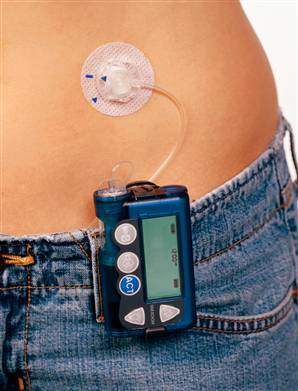
Insulin Pumps More Cost Efficient than Injections Over Long TermA recent study has found that insulin pump therapy may be more cost effective than frequent daily insulin injections in Type 2 diabetics who require large doses of insulin throughout the day.

According to Phyllis Wolff-McDonagh, DNP, a certified diabetes instructor, pump therapy was less expensive over the long term because the insulin was absorbed more efficiently than with injections. Wolff-McDonagh presented the findings at the annual American Association of Diabetes Educators meeting; the study analyzed results from Type 2 diabetics with heavy insulin requirements, over 150 units per day. In those patients, insulin pumps saved over $12,000 in a four year period.

Type 1 diabetics have long used insulin pumps to supplement their bodies’ insulin deficiencies. Few studies have been conducted on the efficacy of insulin pumps for Type 2 diabetics; however, the existing research shows that they appear to be at least as effective in regulating hemoglobin A1c levels as multiple daily insulin injections; in some cases, insulin pumps have actually been more effective. None of the previous research has considered the cost of injections versus the cost of pumps.

In Wolff-McDonagh’s new study, the researchers studied medical records of 15 adults who ranged in age from 40 to 64. All of the patients had begun using insulin pumps within the seven years prior to the study; all had failed to achieve HbA1c levels under 8% even though they had undertaken multiple insulin injections every day for at least a year.

The results of the study showed that the mean HbA1c level in the participants dropped from 9.4% at the beginning of the study to 8.2% after one year. The participants showed an average increase in body mass index from 38.6kg/m2 at the beginning of the study to 40kg/m2 after one year. Previous research into both Type 1 and Type 2 diabetes have shown similar increases in body weight associated with improved blood glucose regulation; the weight gain is thought to be associated with a reduction in glycosuria, or the excretion of glucose in the urine.

To analyze the cost of using the pumps, the study participants were separated into three groups according to their level of basal insulin use through multiple daily injections; the low-insulin group used less than 100 units per day, the moderate group used 100-150 units per day, and the heavy-insulin group used over 150 units per day. In calculating costs, the researchers took into account the cost of insulin and supplies such as syringes and pumps.

For patients who received four injections per day, the cost was $525 per year, or $2,100 for four years. The cost of pump therapy included $5,250 for the pump plus $1,500 per year for pump supplies, equaling $11,250 over a four year period.

The cost efficiency of pump therapy varied according to the dosage of the patients. For low-dose patients, injections were less expensive than pumps, with the former costing $9,172 for four years versus $14,994 for the latter. For moderate insulin users, the costs were about the same at $22,380 for injections and $23,002 for pump therapy. For heavy insulin users, pumps were much less expensive at $28,826 versus $41,100 for injections. Dr. Wolff-McDonagh added that since insulin pumps afford more efficient glycemic control, they may also ultimately be cheaper for moderate insulin users.

Pump therapy is not popular among Type 2 diabetics because reimbursement is uncommon. To determine eligibility for receiving a pump, Medicare looks at C-peptide levels, which Wolff-McDonagh believes should change: “Medicare needs to re-look at this, but before that can happen, large randomized controlled studies need to be done to see what happens over long periods of time,” she said.

Secret Link