New Drug May Reduce Insulin Injection Dependence in Type 1 Diabetics

The drug is being developed with the intention of stopping the process that causes the immune system to attack the pancreas in patients with diabetes.

New Drug May Reduce Insulin Injection Dependence in Type 1 DiabeticsScientists are currently performing tests on a new drug that may lead to the end of insulin injections for Type 1 diabetics. The drug is being developed with the intention of stopping the process that causes the immune system to attack the pancreas in patients with diabetes.

Intended for use with those newly diagnosed with Type 1 diabetes, the medication will halt the progress of the disease by preventing the destruction of the insulin-producing cells of the pancreas. The creators of the drug intend to have it ready for use by patients within three years.

According to the scientists working on the drug’s development, it will help Type 1 diabetics in continuing to produce some of their own insulin. In time, the drug may help the pancreas to recover completely and produce enough of its own insulin to support the patients without insulin injections. Since the pancreas will be producing its own natural insulin, the drug will also reduce the risk of side effects that commonly appear with regular use of synthetic insulin, including kidney disease, stroke, and heart disease.

Clinical trials on the drug’s effectiveness and possible side effects are being conducted at 140 research centers in the United Kingdom. King’s College Hospital in London is one of the facilities involved in the study. The trials are also being conducted in other countries in Europe, North America, and South Africa, and in Israel.

“We have proved in earlier trials that our compound stops the immune system attacking the pancreas,” said Dr. Shlomo Dagan of Andromeda Biotech, an Israeli biotechnology firm. “There is evidence to suggest that using the drug over a period of time, maybe a couple of years, will allow the pancreas to recover enough to make more insulin. In that situation the patient could stop injecting insulin.”

“The research on this shows it may well be possible that patients could cope without the need for any insulin injections,” said Dr. Eleanor Kennedy, spokeswoman for the Juvenile Diabetes Research Foundation. “This is very exciting,” continued Kennedy.

Type 1 diabetes is caused by a malfunction in the immune system which causes it to attack the pancreas, destroying insulin-producing pancreas cells that manage blood glucose levels. If the condition is left untreated, blood glucose levels rise to dangerously high levels.

Type 1 diabetics require regular injections of insulin to supplement their own lack of insulin due to the destruction of pancreatic cells. If a Type 1 diabetic does not receive insulin, he or she will enter a coma and die. The new medication being developed, temporarily called DiaPep277, prevents the immune system from destroying the insulin-producing pancreatic cells, allowing the body to make enough of its own insulin that injections are not required. The medication is made from a protein known as a long-chain heat-shock peptide and was first developed by professor Irun Cohen at the Weizmann Institute in Israel.

Type 1 diabetes affects nearly 250,000 people in the United Kingdom; in the United States, that number rises to about three million. Type 1 diabetes differs from Type 2 diabetes in that the former is typically diagnosed in childhood and the latter is developed later in life and is typically caused by obesity. Type 1 diabetics receive injections of synthetic insulin to manage their blood glucose levels as their bodies are unable to produce insulin on their own. Both types of diabetes are very costly to the public, costing millions in treatment every year.
Obesity Rates Have Doubled in Past 30 Years

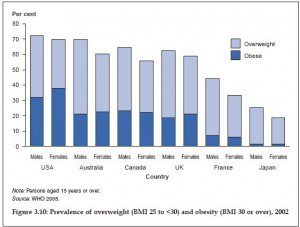
Three new studies being published in the Lancet, a British medical journal, state that worldwide obesity rates have doubled in the last 30 years.

Obesity Rates Have Doubled in Past 30 YearsObesity rates have been skyrocketing over the last three decades, and the epidemic shows no sign of slowing. While populations the world over have seen rising obesity rates, the West has been especially susceptible to the dangerously unhealthy rise in average weight, with all the health complications that come with it.

Three new studies being published in the Lancet, a British medical journal, state that worldwide obesity rates have doubled in the last 30 years. Despite the alarming increase in obesity, however, cholesterol and blood pressure levels have fallen. Study researchers have stated that they are worried about how much worse the world’s obesity problems could get.

One of the studies found that Pacific Islanders, such as the American Samoa, are the heaviest. Among developed nations, Americans are the heaviest while the Japanese are the thinnest.

“Being obese is no longer just a Western problem,” said Majid Ezzati, professor of public health at Imperial College London. Ezzati was an author on one of the studies being published in the Lancet. The obesity epidemic has made appearances nearly everywhere in the world, and it’s affecting health and lifespans wherever it crops up.

A series of articles in the Lancet states that the increases in obesity in almost all countries around the world seem to be motivated primarily by changes in the global food system. More food is being consumed than ever before, and it is also more processed, affordable, and effectively marketed.

In 1980, only about 5% of men and 8% of women around the world were classified as obese. As of 2008, that number had jumped to almost 10% for men and 14% for women. The frightening numbers translate to 205 million obese men and 297 million obese women around the world. Additionally, 1.5 billion adults around the world are considered “overweight.”

The richer nations of the world are more effective at lowering cholesterol and blood pressure levels. However, according to the researchers, people are becoming heavier almost everywhere in the world, except for a few areas including South Asia and central Africa.

The obesity epidemic has been found to be related to the increasing levels of caloric energy available to people throughout the years. While the amount of energy available to people in different areas of the world varies widely, it has increased drastically in nearly all areas of the world over the last 50 years.

From 1971 to 2004, women in the U.S. consumed an average of 335 more calories per day. In the same time period, men consumed 168 more calories per day, with much of the increases in caloric consumption being made up by carbohydrates such as processed and refined sugars found in soft drinks.

Obesity increases the risk of a host of diseases, including Type 2 diabetes, heart disease, osteoarthritis, and some types of cancer. Additional physical complications such as sleep apnea can also be caused by obesity. It is the leading cause of preventable death around the world and it is seen as one of the most pressing health problems of the 21st century. It has been found to reduce life expectancy and, according to a 2005 article published in the Lancet, it is the sixth most-important risk factor in contributing to the overall burden of disease around the world. Obesity is a public health problem because of its prevalence and its effect on the overall health of the public as well as the additional health care costs associated with it.

Meta-analysis Reveals Dark Chocolate and Cocoa Reduce Cholesterol

A meta-analysis of ten clinical trials has revealed that the consumption of dark chocolate and cocoa products, both of which are rich in polyphenol, may reduce total cholesterol and LDL cholesterol.

Meta-analysis Reveals Dark Chocolate and Cocoa Reduce CholesterolA meta-analysis of ten clinical trials has revealed that the consumption of dark chocolate and cocoa products, both of which are rich in polyphenol, may reduce total cholesterol and LDL cholesterol. However, consumption of these products has no effect on HDL cholesterol.

The collaborative effort between Brigham and Women’s Hospital and Harvard Medical School revealed that short-term consumption of dark chocolate was associated with reduced total cholesterol by 6.23 milligrams per dl; LDL was reduced by 5.9ml/dl on average.

“The degree to which LDL and [total cholesterol] levels were reduced in this analysis reflects some measure of potency of the coca regimen,” said the researchers. The findings were published in the 2011 edition of the European Journal of Clinical Medicine.

The research team also stated that their analysis showed the cholesterol-lowering effect to be greater when induced by the consumption of cocoa polyphenols from dark chocolate rather than from cocoa beverages. The team was led by Luc Djoussé, MD, DSc.

Studies of the polyphenols found in cocoa have been painting a healthier picture, with reports indicating possible benefits for skin health, cardiovascular health, and brain health. The media has been reporting more and more on the benefits of cocoa products.

Most of the research into the healthful properties of cocoa has been concerned with the cardiovascular benefits of flavanols, also known as flavan-3-ols or catechins. The monomeric flavanol (-)epicatechin, in particular, has received much research attention.

Researchers from the University of Reading in England, along with candy manufacturer Mars, have reported that cocoa may have an effect on the bacteria in the human gut, giving it potential as a prebiotic.

The purpose of the meta-analysis of ten clinical trials was to determine the effects of dark chocolate and other cocoa products on blood lipid levels. According to the researchers, since dark chocolate is formulated with saturated fat and contains additional calories, it may have unwanted effects on cholesterol levels.

The research team headed by Dr. Djoussé searched the medical literature from 1966 to 2010 and found ten clinical trials of dark chocolate and cocoa products, both rich in flavanols, evaluating 320 participants in all. Half the studies gave participants less than 500mg of flavanols every day, the other studies gave participants over 500mg daily. The duration of the trials was from 2 to 12 weeks.

The team performed an analysis of the numbers offered by the studies and found that consumption of dark chocolate and cocoa products was associated with significant reductions in levels of LDL and total cholesterol.

However, the numbers revealed no changes in HDL cholesterol or triglyceride levels.

“These current analyses are consistent with beneficial effects of dark chocolate/cocoa product consumption on LDL and neutral effects on triglyceride and HDL in a short-term intervention,” said the team of its findings.

According to Dr. Djoussé’s team, the likely mechanism for the reduction in cholesterol levels involves the flavanoids found in the dark chocolate and cocoa products.

“Flavan-3-ols in cocoa are present as monomers, oligomers or polymers, better known as procyanidins, and generally are thought to inhibit cholesterol absorption as well as the expression of LDL cholesterol receptors,” the researchers stated.

The researchers further stated that additional studies would be needed to evaluate the optimal dose of cocoa consumption and any possible long-term effects that frequent consumption of dark chocolate might have on cholesterol levels.

Poll Reveals Consumer Confusion about Healthy Fats

The 2011 Consumer Attitudes about Nutrition Survey conducted by the United Soybean Board (USB) gathered opinions of 1,000 U.S. adults on issues of dietary health.

Poll Reveals Consumer Confusion about Healthy FatsU.S. consumers are more aware today that not all fat is bad. Many realize that there are “good” and “bad” fats, but how many can identify that polyunsaturated and monounsaturated fats belong to the former category?

The 2011 Consumer Attitudes about Nutrition Survey conducted by the United Soybean Board (USB) gathered opinions of 1,000 U.S. adults on issues of dietary health. The results showed that 53% of the adults in the study agreed that “following a moderate-fat diet but choosing good fats over bad fats” was a healthy eating strategy.

On the other end of the spectrum, 9% of the participants believed that “following a low-fat diet by reducing all fats” was the healthiest eating strategy and that the government recommends this type of diet. The actual diet recommended by authorities places more emphasis on the type of fat consumed instead of the total amount.

Although half the participants thought that eating fat was fine as long as they were healthy, only 33% identified monounsaturated fats as “very healthy” or “somewhat healthy.”  In addition, only 33% of the respondents thought that polyunsaturated fat was “very healthy” or “somewhat healthy,” but 79% rated omega-3 fatty acids as being healthy. The disparity highlights an apparent confusion in terminology among the respondents — as fatty acids that contain more than one carbon-carbon double bond, omega-3 fatty acids are classified as polyunsaturated fats.

“Despite an interest in choosing good fats over bad, most U.S. consumers have a hard time pinpointing the healthier choices,” said the USB.

Most participants did agree that trans fats and saturated fats were not as healthy as the other types of fat, with only 9% of respondents believing that trans fats were healthy and 10% believing that saturated fats were healthy.

The USB’s findings are compatible with those of the Food & Health Survey 2011, conducted by the International Food Information Council (IFIC). That survey showed that nearly a fifth of the consumers polled stated that they were attempting to limit both monounsaturated fats (the healthy fats found in nuts, olives, etc.) and polyunsaturated fats (for example, fish oils).

Additionally, The USB’S research revealed confusion among participants over the healthiness of butter and margarine. Over half of the consumers (54%) stated that they believed butter was healthier than margarine or buttery spreads. Yet 24% indicated that they did not know whether butter or margarine was healthier; in 2010, that number was at 14%.

“Results indicate a real need/opportunity for margarine manufacturers to educate via product packaging,” noted the USB. “Consumers who think butter is healthier continue to cite their main reason as ‘it’s more natural’ than margarine. Those who believe margarine is healthier (33%) cite margarine’s lower fat content.”

Consumers were also polled on their attitudes about the relative healthiness of cooking oils. They believed olive oil was the healthiest, then flaxseed oil, canola oil, soybean oil, sunflower oil and safflower oil, according to the USB.

“Consumers continue to perceive soybean oil as a healthy choice. Among consumers with an opinion on healthiness, 81% think soybean oil is very or somewhat healthy.”

More and more consumers are trying soymilk, with 43% of the studies participants having tried it. Edamame has knocked veggie burgers out of the #2 spot in the list of “most consumed soyfoods;” soymilk is the #1 most consumed soyfood.

The USB’s survey also revealed that the consumers ate more soy products at home than they did at restaurants, citing reasons that soyfoods were rarely available in restaurants.

“Very Little Evidence” of Link Between Vaccines and Diabetes, Autism

The U.S. Institute of Medicine (IOM) has stated in a recent report that vaccines are overwhelmingly safe and that they do not cause diabetes or autism.

Very Little Evidence of Link Between Vaccines and Diabetes, AutismThe U.S. Institute of Medicine (IOM) has stated in a recent report that vaccines are overwhelmingly safe and that they do not cause diabetes or autism. The IOM came to the conclusion after reviewing over 1,000 published studies.

“We looked very hard and found very little evidence of serious adverse harms from vaccines,” said Ellen Wright Clayton, chairwoman of the reporting committee. “The message I would want parents to have is one of reassurance.” Wright Clayton is also the director of the Center for Biomedical Ethics and Society at Vanderbilt University in Nashville, Tennessee.

The US Health Resources and Services Administration commissioned the report in 2009. It looked at the eight vaccines that make up the majority of the claims filed with the National Vaccine Injury Compensation Program (VICP). The VICP covers 11 vaccines, providing compensation for patients whose health is negatively impacted by vaccines.

The vaccines reviewed by the study include those for influenza, hepatitis B, hepatitis A, meningococcal disease, human papillomavirus, chicken pox, diphtheria, tetanus and pertussis (DTaP), mumps and rubella (MMR), and measles.

The report does state that the research “convincingly supports a causal relationship” for 14 actual adverse health effects. These effects include allergic reactions to six of the vaccines, infections associated with the chicken pox vaccine, and brain inflammation and fever-induced seizures linked to the MMR vaccine. It stated that the severe effects only occur in children who already have weak immune systems.

Four additional adverse effects were linked to vaccines but the evidence for a causal relationship was less convincing. Of the 135 remaining links between vaccines and adverse health effects, the study stated that there was “inadequate evidence to accept or reject a causal relationship.” The VICP may use the new analysis to update the Vaccine Injury Table. The table already includes the majority of the adverse effects contained in the new IOM report.

The IOM states that evidence “favors rejection” of reports that Type 1 diabetes was linked to the MMR and DTaP vaccines. The IOM also sought to reject reports that the MMR vaccine was linked to autism.

“We found five really solid epidemiological reports that were very clear that MMR is not associated with autism, and does not cause autism,” said Wright Clayton.

The IOM has issued previous reports that reached the same conclusion. A 1998 paper was published in The Lancet by U.K.-based surgeon Andrew Wakefield positing that links existed between autism and vaccines. That report has since been retracted by The Lancet, which stated that “several elements” of Wakefield’s paper were “incorrect.” However, the paper continues to have an influence: some parents still refuse to have their children vaccinated, citing risks of autism. The lack of vaccination has led to outbreaks of diseases among children, including whooping cough and measles.

“For those parents who are on the fence, this will be another piece of reassuring evidence, although I don’t know how many more pieces of reassuring evidence you need. For those who are committed to the concept that vaccines are harmful independent of what the data say, it won’t matter,” said Paul Offit, chief of the infectious diseases division of The Children’s Hospital of Philadelphia.

Offit does say that he is “uncomfortable as a scientist” with the methodology utilized by the IOM. When the committee analyzes most of the vaccines, “They’re looking at case reports and trying to decide whether they think the evidence supports a link,” he says. “That’s an unusual way to do science, because now you’re making it more subjective.”

Wales University Developing Blood Glucose Alerts Via Text Message

A high-tech diabetic safety service may soon use text messages to notify paramedics if a patient’s blood sugar levels dip too low.

Wales University Developing Blood Glucose Alerts Via Text MessageA high-tech diabetic safety service may soon use text messages to notify paramedics if a patient’s blood sugar levels dip too low. The program is being developed by researchers at Swansea University in Wales and scientists hope it reduce costs for the National Health Service in addition to saving the lives of diabetics.

The team at Swansea has been working with various technology firms to create the new generation of blood glucose sensors, an important piece of equipment for diabetics.

The new project aims to develop a notification service that will notify family members or medical personnel via text message when a monitoring unit detects that the patient is experiencing dangerous blood glucose levels.

The monitoring unit would also streamline blood glucose testing for diabetics, making it easier and quicker for them to test their levels throughout the day. According to Dr. Vincent Teng, a nanoelectronics expert at the Swansea University College of Engineering, the testing system is both pain-free and non-invasive, unlike testing through other methods such as pricking fingers several times a day.

Dr. Teng stressed the importance of implementing a system that can notify health professionals or family members if diabetics faint and are unable to contact emergency services themselves. “Diabetic patients with low blood glucose can become unconscious due to hypoglycaemia and there are many reported incidents where patients who either live or work alone fainted, which can be fatal,” said Dr. Teng. “Therefore, a multi-functional monitoring system is important to manage the glucose level of diabetic patients and to provide warning when the patient is unconscious.”

The primary goal of the research project is to create a “low-cost continuous monitoring system” that integrates blood glucose sensors and mobile networks to ensure that diabetics are never stuck in a situation where their glucose levels drop to dangerous levels but are unable to alert anyone. The project cost £470,000 and was funded by the Welsh Government’s Academic Expertise for Business program, which is backed by the European Union.

The monitoring system would utilize micro-needles, each measuring less than a millimeter in size, that take blood samples from the dermal skin. Utilizing a combination of nanotechnology and wireless communications technology, the system would gather readings and transmit the results to cell phones and then to the National Health Service, passing on the data to the physicians taking care of the patient.

Blood glucose monitoring is important to diabetics for several reasons. Not only does it alert diabetics to possible dangerous blood glucose levels, but it establishes trends in glucose levels that can help diabetics plan their meal and exercise schedules and determine when to take medication. Treatment for dangerous blood glucose levels may include insulin or dietary supplements.

Officials involved in the project say that the system won’t only be useful for diabetics. Once proven effective, it can be adapted to provide monitoring and notification services for patients of other chronic diseases, such as cancer, asthma, and heart disease.

The Welsh Government’s Academic Expertise for Business program funded the project. The program uses European Union convergence funding to work with Wales’ academic institutions, utilizing their knowledge, facilities and expertise to promote positive economic gains for Wales. Also known as A4B, the Academic Expertise for Business program will last six years and will provide £70 million in total funding for partnerships between higher and further learning institutions and the business community.

Inner Workings of Pancreas Detailed With New Imaging Technology

Based in Umeå University in Sweden, the team has used this emerging technology to describe embryonic development of the pancreas and the distribution of the islets of Langerhans in the adult pancreas.

Inner Workings of Pancreas Detailed With New Imaging TechnologyA research team lead by Professor Ulf Ahlgren and his colleagues is at the forefront of the development of optical projection tomography. Based in Umeå University in Sweden, the team has used this emerging technology to describe embryonic development of the pancreas and the distribution of the islets of Langerhans in the adult pancreas. The team’s findings will aid future research that utilizes modeling of human organs in treating diabetes.

The researchers presented new methods of conducting Optic Projection Tomography in the journal “IEEE Transactions on Medical Imaging.” The team has utilized these methods to perform research into the structure of the adult pancreas as well as the biology of the developing pancreas. The team’s findings will be published in the journals “Islets” and “PLoS ONE.”

OPT creates three-dimensional images of gene and protein expressions in biological tissue. While OPT is similar to medical computer tomography, it uses ordinary light as opposed to X-rays. The technology was initially limited to imaging small tissues but the Umeå team has refined the process to allow researchers to create analysis models of entire organs — for example, using the technology to analyze the pancreas from rodent model systems. OPT is being used in an increasing number of fields, including pathology, plant biology, and developmental biology.

The Umeå team is presenting the study in “IEEE Transactions on Medical Imaging,” where they will describe a technique for using computers to correct imperfections in OPT images. The new techniques increase the imaging technology’s sensitivity to small and poorly illuminated objects, improving quantitative and visual analyses across a variety of tissue types.

Utilizing this technology has allowed the researchers to discover new findings about the structure and development processes of the pancreas. Pancreas function is an important factor in the development of diabetes; the organ contains the islets of Langerhans, structures which produce insulin. When insulin production is disrupted or cells become less efficient at responding to insulin signals, the organism can develop diabetes.

In the study presented in the journal PLoS ONE, Ahlgren’s research team was able to use OPT technology to describe developmental biological conditions present during the formation of the gastric lobe as it formed in the pancreas. The development of the gastric lobe, which occurs in the womb, had not been described in detail up until now. The team found that the gastric lobe’s development is dependent on the healthy development of the spleen.

The team’s other study, published in the journal Islets, showed that the islets of Langerhans are more numerous and are also not as evenly distributed throughout the pancreas as once thought. OPT technology has allowed them to determine that the islets are found in greater concentrations in the gastric lobe than in other areas of the pancreas.

The islets of Langerhans were discovered in 1869 by Paul Langerhans, a German pathological anatomist. A healthy adult pancreas contains about a million of these structures; they constitute about 1% to 2% of the total mass of the pancreas. In the rat pancreas, they secrete a variety of hormones, including glucagon, insulin, amylin, somatostatin, pancreatic polypeptide, and ghrelin.

The two studies will aid additional research in determining the role that both hereditary and environmental factors play in the number of insulin-producing cells that are present in modeling systems for diabetes. The studies were funded by various organizations, including the Kempe Foundations.

Endocrine Society Supports Review Boards to Streamline Research

A position statement released by the Endocrine Society supports the use of central institutional review boards to encourage progress in clinical research and streamline regulatory review in multicenter trials.

Endocrine Society Supports Review Boards to Streamline ResearchA position statement released by the Endocrine Society supports the use of central institutional review boards to encourage progress in clinical research and streamline regulatory review in multicenter trials.

According to the statement, “Interdisciplinary research is critical to elucidate the mechanisms of a wide spectrum of endocrine disorders and diseases and to identify the effective treatments for them. Increased acceptance, accessibility and use of central [institutional review boards] could facilitate progress in clinical studies without reducing patient protection.”

The review process is currently slowed by regulations requiring clinical investigators to secure approval from multiple institutional review boards before they can begin studies that span several research centers. Waiting periods for approval can last a year or more as each individual institution conducts its own reviews and interviews researchers. Local biases and institutional demands can also hamper the process.

The safety of patients is still of utmost importance in conducting research. The Endocrine Society stated that it supports the following positions:

  • Central institutional review boards should be accredited through a certification process, similar to the one offered by the Association for the Accreditation of Human Research Protection Programs (AAHRPP).
  • Central institutional review boards should establish written agreements and encourage their use by investigators who are conducting studies across multiple research sites.
  • The Office of Human Research Protections should ensure the protection of those using central institutional review boards and offer information on the implications of using those review boards.
  • Professional organizations should encourage and promote the use of these central institutional review boards.
  • The NIH should advocate for researchers to consider the use of central institutional review boards in proposals for investigator-initiated studies that will utilize multiple sites. Central institutional review boards should be required for use in studies solicited by the NIH and involving multiple research sites; this requirement should apply to all grant solicitations in the future.

“The number of approvals necessary to proceed with a multisite study that utilizes each site’s [institutional review board] may involve waiting periods of a year or more,” stated Janet E. Hall, MD, president of The Endocrine Society, in a press release. “This process delays the progress of the study, discourages the investigators involved and is highly cost-ineffective. The Endocrine Society strongly encourages the utilization of [central institutional review boards] for multicenter clinical studies in order to advance clinical research and improve patient care while maintaining the highest patient safety standards.”

The Endocrine Society was founded in 1916, then known as the Association for the Study of Internal Secretions. The organization studies endocrinology and metabolism, publishing four leading journals in its fields, including Endocrinology, Endocrine Review, Journal of Clinical Endocrinology and Metabolism, and Molecular Endocrinology. The Society’s mission is “to advance excellence in endocrinology and promote its essential and integrative role in scientific discovery, medical practice, and human health.”

Over 14,000 members belong to the Society, from 85 countries around the world. It holds an annual post-graduate assembly called the Clinical Endocrinology Update, speaking to members about the importance of endocrinology and its implications for medicine as a whole.

The Endocrine Society also sponsors Sister Societies whose members correspond via the Endocrine Society. Sister societies include the American Diabetes Association, the American Association of Clinical Endocrinologists, the American Thyroid Association, and the Obesity Society.

For more information on the Endocrine Society, visit http://www.endo-society.org.

Calories and Sugar in Flavored Milk to Be Reduced

According to the Milk Processor Education Program, that’s when calories and sugar will be reduced in kid-favorite flavored milks.

Calories and Sugar in Flavored Milk to Be ReducedThis September, schools and moms will have a little more incentive to give their children flavored milks: according to the Milk Processor Education Program, that’s when calories and sugar will be reduced in these kid-favorite flavored milks.

MilkPEP, the organization responsible for the National Milk Mustache “Got Milk?” Campaign, stated that starting later this year, cartons of flavored milk will contain fewer than 150 calories and 22 grams of sugar on average.

The 2010 Dietary Guidelines for Americans states that milk provides excellent benefits for children’s development, including vitamin D, calcium, and potassium. These vitamins and minerals are underrepresented in the diets of American children, making milk a great drink of choice.

Milk is the number one source for these nutrients in the United States, according to MilkPEP.

Flavored milk, while popular with kids, has always contained more calories and sugars than regular white milk. However, the milk industry has completed a five-year reformulation process that will see cartons of flavored milk having just 31 more calories than cartons of plain milk. These reformulations were designed to “provide nutritious new products with the same great taste kids love,” said MilkPEP.

The reformulations will also reduce sugar content in flavored milks by 38% for both fat-free and low-fat chocolate milk.

“There are a lot of kids that don’t want to drink plain white milk; they really love drinking flavored milk and that’s very important for the essential nutrients in milk,” said Vivien Godfrey, CEO of MilkPEP. “It’s a happy balance between some added sugars but making sure that the kids actually drink the milk as opposed to taking the white milk on the lunch line and not in fact drinking it.”

Flavored milk has drawn controversy for its role in the diets of developing children amid growing obesity trends in children. Almost one in three American children is obese or overweight, while the USDA Healthy Eating Index rates the average child’s diet at a score of 55.9 out of a possible 100 points.

Some schools have removed flavored milk entirely from the menu at cafeterias, citing the excessive intake of sugary drinks by children. These drinks, such as sodas, make up nearly half the sugar in the daily diet of an average child; according to Godfrey, however, flavored milk makes up only 3% of that total.

The efforts to reformulate flavored milk to be healthier were undertaken in light of research showing that many students refuse to drink milk at all if flavored milk is not available. MilkPEP conducted a study of 58 elementary and secondary schools and found that milk consumption overall fell 35% when flavored milk was not offered.

The School Nutrition Association’s “State of School Nutrition 2011” report stated that 98% of school districts in the U.S. have fat-free, skim, or 1% milk options available to kids and 95.4% give students the option of drinking flavored milk.

“Changes are huge because milk is so important and we sell probably 70 percent of our milk to students,” said President Elect Sandra Ford of the School Nutrition Association. “To take away that chocolate milk to those students would be devastating to a children’s calcium intake, so we like that producers have responded by reducing the sugar themselves.”

According to Godfrey, MilkPEP is an agricultural “check off” program, one of 18 in the country. All U.S. milk processors large enough to qualify are mandated by Congress to pay into a marketing pool run by MilkPEP.

iPad App Streamlines Check-In at the Doctor’s Office

Software developer drchrono recently made waves when it released an electronic health care management app for the iPad, which then received ONC-ATCB certification.

iPad App Streamlines Check-In at the Doctor’s OfficeSoftware developer drchrono recently made waves when it released an electronic health care management app for the iPad, which then received ONC-ATCB certification. Now the developer has continued its work in the mobile space, releasing an iOS app designed to replace paper-based patient check-ins at physicians’’ offices.

The new app is called OnPatient and it can be downloaded for free on iPads. OnPatient can be utilized as a standalone platform for patient check-in; it can also be integrated with the EHR app previously released by drchrono.

Michael Nusimow, CEO and co-founder of drchrono, hopes that the company’s new mobile apps will streamline digital record keeping and patient check-in while also reducing costs. “The OnPatient check-in app digitizes the waiting room and eliminates significant barriers to mass adoption of patient check-in technology,” said Nusimow. “Proprietary check-in hardware is prohibitively expensive and integration with existing EHR systems is too complex. We designed the OnPatient app to be intuitive for both physicians and patient users to create a better patient check-in experience.”

The OnPatient app features templates that can be customized to an individual practice, eliminating the need for clipboards and physical paper copies in waiting rooms. Patients who download the app will be able to provide family medical history and demographic information, enter insurance coverage information, upload a profile photo, and sign HIPAA consent forms digitally. The information then integrates automatically into the drchrono records system. Upon later visits, patients will not have to fill out duplicate forms, instead simply confirming that the information is accurate. Any changes in information can be entered through the app.

That saves “time and money,” according Nusimow. “Putting in insurance info and all that minutiae takes a lot of time.”

“…The next time [patients] go to the doctor, they can just engage with the doctor,” he continued.

Surinder Saini, MD, a gastroenterologist who practices in Fountain Valley, California, was an early adopter of OnPatient. Saini says that OnPatient “has benefited my practice in many ways.” The app also makes entering records easier and more enjoyable for patients, according to Saini. They enjoy being “given an iPad to register in the office,” and they “love to enter information” using the iPad.

According to officials, OnPatient meets all health care industry standards for the privacy and security of patient information.

The good news continues for drchrono: the company recently announced that it secured $650,000 in seed funding from Yuri Milner, founder of DST Global, and General Catalyst, a venture capital firm. The company had previously announced in July that it received $675,000 in funding from General Catalyst, 500 Startups, Charles River Ventures, and angel investors.

drchrono’s earlier EHR app was granted ONC-ATCB certification in July, being the first iPad-native app to receive the recognition. The certification allowed physicians’ offices to receive up to $44,000 in government incentives for adopting the paperless records system. “This certification transforms our EHR app and the iPad into a potentially affordable platform that could finally drive global usage and adoption of electronic medical records,” said Nusimow. “The government subsidy offered to physicians who adopt our free EHR solution could be transformational in bringing electronic record keeping into every medical practice.”

The app automatically tracks how much an office uses it and calculates the amount that the office should receive in incentives then submits that amount to the government.

Daniel Kivatinos is cofounder and COO of drchrono. “The government is incentivizing doctors to go digital and the iPad is a natural fit in the medical space,” said Kivatinos. “It was a thrilling experience to be the first company to use an iPad during the meaningful use certification process.”

Secret Link